Mastering Networking and Content: Rocky Shooting Star
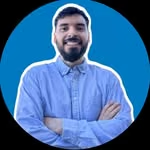
About Rocky Shooting Star
Matt, known as Rocky Shooting Star, is a music producer from Vancouver Island, on the West Coast of Canada. He started making beats in FL Studio as a kid, ran type beat channels on YouTube, and built connections in the Toronto rap scene. After burning out and stepping away from music for about a year, he came back stronger, and one of his Instagram posts has now passed 1.1 million views, catching the attention of established producers like El Hitta.
Every producer's path has ups and downs, but few journeys show as clearly how persistence, relationships and reinvention can turn things around. In this post, we dive into the story of Rocky Shooting Star, from his first beats to his comeback, and what you can take from it for your own music production career.
From Childhood Exploration to FL Studio
Early Beginnings: A Garage Drum Set
Matt's first musical memory goes back to when he was a single-digit age: he wrote a song about being a rock star millionaire, "just like my father, who is neither of those things." He had a drum set his parents bought him and a kid-sized guitar, and he would come home from school and go straight to the garage to play, without really knowing what he was doing. Later, he taught himself to play a few song melodies on the piano.
Discovering Production
Around eight or nine, Matt got into electronic music through Monstercat, a label based close to where he grew up in Canada. While looking up how to make EDM, he found a producer on Twitch making dubstep with the stock plugins of FL Studio, which were exactly what Matt had access to at the time. That's how he downloaded FL Studio and started to understand how electronic music is made.
The real spark came at a friend's house, when a buddy challenged him to remake the beat of a song they were listening to. His version actually resembled the original. "It was one of the first times that I ever had that, whoa, this doesn't sound like actual garbage," he recalls. From then on, making beats while two of his friends egged him on became a regular hangout activity.
The Switch from EDM to Trap
One of those friends put him onto the rapper Logic, and Matt moved from EDM to rap beats, especially high-energy trap with heavy, distorted 808s. He believes starting with a simpler genre kept him from burning out. He describes the switch as going from trying to paint an insanely intense painting to grabbing "a piece of paper and crayons."
Taking Beat Making Seriously
Posting Beats Without Risk
Around fourteen, in his first year of high school, positive feedback from friends pushed Matt to take it more seriously. He also ran a Logic fan page with thousands of followers, and sharing his beats there got him good feedback from people who didn't know him. That gave him the idea to start a separate Instagram page just for beats, without telling anyone he knew in real life, so there was no risk of embarrassment. From there, he started sending beats to artists.
The Type Beat Channels
Matt then started a type beat channel, planned with the help of tutorials, focused on the melodic pain style he was making the most of at the time, like Polo G and Juice WRLD. A few months later, he launched a second channel for trap beats, which didn't see the same results.
Niching Down to the Toronto Scene
Finding an Underserved Niche
Looking for a way to change things, Matt noticed that almost nobody was posting type beats for specific Toronto artists, even though people were searching for them. He was already listening to that scene, and he figured those artists were more likely to answer him than Polo G or Juice WRLD. So he started posting type beats for artists like Duvy and Lil OT, sometimes reusing beats from his main channel under a different name.
Consistency over Hits
The Toronto channel got fewer views overall, but they were consistent. His main channel was hit or miss instead: one beat passed 100K views, sold one lease, and then sold as an exclusive for around $350 USD. Looking back, he says he wouldn't have sold the exclusive, at least not for that low. The channel didn't have enough subscribers and watch time to be monetized either, but the hit gave him his first real taste of cause and effect, and he doubled down.
Burnout and Stepping Away
When Motivation Runs Out
After that peak, nothing Matt tried made a difference, and both channels went stagnant. He kept making two beats and two videos a day without motivation, which he now calls unsustainable. The final blow came when an artist he had been pushing hard to land a song with got locked up. Matt stopped making music for about a year.
The Comparison Trap
During that break, every time he opened Instagram and saw producers who started at the same time as him keep progressing, it stung, especially when people he felt were less skilled landed bigger placements. As host Esteban put it: "You didn't quit. You took a break. [...] Quitting is ultimately never doing it again."
The Comeback
Not Starting from Zero
While on vacation from work, Matt re-downloaded FL Studio and made a beat just for fun, with no goal in mind. He had used a loop for it and sent it back to the loop maker, who replied that he would get his manager to send it to Quavo, or something along those lines. That's when Matt realized he wasn't starting from scratch: his old connections were still there, and he just needed to warm them up.
A Month-Long Mentorship Boot Camp
Shortly after, Antar, a loop maker whose loops Matt had mostly been using, posted that he was looking for people to mentor. Despite being wary of the whole guru thing, Matt went for it and did one-on-one calls with him every weekday for a month. Each day came with a task, like reaching out to fifty new people by DM, or sending ten new beats by the next day, otherwise there would be no call.
The biggest lesson was how to communicate with people and build relationships: approach artists confidently, without being cocky or overly aggressive. The other one was about social media: show your face and be relatable. To get over the fear of what people he knows might think, Matt asks himself whether he would regret not trying on his deathbed.
Going Viral and Turning Views into Connections
Why the Post Worked
One of Matt's Instagram posts, a joke about lying on your resume and not knowing what to do when a producer at the studio asks you to set up a bus, now has around 1.1 million views. He thinks it resonated because it was funny and you had to be part of the in-group to get the joke, which makes people feel in on it.
The Follow-Up Message
Producers like El Hitta engaged with his posts, and Matt made sure to follow up. Instead of asking them to check out his work, he thanked them for showing love and simply asked where he could send beats, as if it was a regular interaction. Esteban calls this "assuming the sale," and his theory is that the viral post brought these producers to Matt's page, where his other content did the rest.
Do Producers Need a Manager?
Matt recently signed with a producer from Toronto who represents a couple of producers. The manager only gets twenty percent of what he directly brings in, not of every future song with an artist he introduced. Outside of a no-risk deal like that, Matt doesn't think a manager is necessary unless you have so much logistics going on that you need to delegate it.
Connections vs. Production Skills
Asked which matters more, Matt doesn't hesitate: "Definitely the connections. Thousand, thousand, thousand percent." You need to reach a certain level of production skill, but past that threshold, the people you can send beats to make the difference. As for luck, he believes "you kind of create your own luck."
Key Takeaways for Aspiring Producers
- Don't See a Break as a Failure: Stepping away when you need to isn't quitting, and it can set you up to come back stronger.
- Niche Down: Focusing on a smaller scene like Toronto brought Matt more consistent views and more reachable artists.
- Build Relationships: Past a certain skill level, connections matter more than having the best beats.
- Show Your Face: Relatable, funny content can bring industry contacts to your page.
- Set Yourself Up to Succeed: Have a dedicated workspace for work, keep backup beats for the days you can't make one, and set high but realistic expectations to avoid burnout.
Conclusion
Rocky Shooting Star's journey shows that the path of a music producer is rarely straight. From type beat channels and burnout to a mentorship boot camp and a viral post, he learned that relationships, content and resilience matter as much as the beats themselves. If you're building your own music production career, take these lessons to heart, and remember that a step back can be part of moving forward.
Frequently Asked Questions
Should music producers focus on local scenes?
Focusing on a local or regional scene can help producers get more consistent results and connect with artists who are more likely to answer than mainstream stars.
Is networking more important than production skills?
Both are necessary, but once you reach a solid skill level, connections usually make the difference in selling beats and landing songs.
Do music producers need a manager?
Not always. A manager makes sense when you have too much logistics to handle alone, or when the deal carries no risk for you, like a commission only on what the manager directly brings in.
How can producers avoid burnout?
Set realistic expectations, keep backup beats for low-energy days, and slow down before you hit a wall instead of pushing until you have to stop completely.
Esteban Candelario (00:01.708) What's going on everyone? Welcome back to Producer Talk presented by Producer Fury. I'm your host, Esteban. Today we're sitting down with the producer who's built his career through persistence, relationship, and a willingness to reinvent himself when things weren't working. From making beats on his dad's computer as a kid to growing up, making tight beat channels on YouTube, experiencing burnout, and stepping away from music completely, then finally coming back way stronger. His journey is full of lessons that every producer can learn learn from.
We're going to take a deep dive into how he got started, the challenges he faces, the mentorship he got that changed everything for him, and how he really built industry relationships. So here we are, with Matt. Matt, how are you, man?
Rocky Shooting Star (00:39.416) Good. Good. How are you doing, man?
Esteban Candelario (00:41.848) I'm doing awesome, bro. So first off, you know, introduce us in terms of like, you know, what you what your producer name is, you know, tell us, you know, who you are. And then also, you know, walk us through your journey and how it started for you.
Rocky Shooting Star (00:52.418) Yeah, definitely. my name is Matt, also Rocky. Rocky Shooting Star is my producer name. I'm from Canada, not the typical part of Canada where you usually hear about. I'm from the West Coast, live on an island called Vancouver Island. And yeah, I mean I started, you know, super young, honestly. Gl like my first, you know, musical moments were super young. They weren't really the same as what I'm doing now in by any means, but
Like yeah, my very first memory of like music kind of thing was back when I was like single digit age still. I had written a song about being a a rock star millionaire, just like my father, who is neither of those things. yeah, I remember like being down in the garage at a super, super young age, like with this little drum set and like little kid sized guitar I had and
I don't know, probably with strumming non existent chords and hitting off beats on the drums, but that's you know, it it's gotta start somewhere, right?
Esteban Candelario (01:56.472) Mm-hmm. So when you were a kid, like maybe let's say seven or eight years old, you were playing drums. Where is that was that something that was self taught or did your dad teach you or like how did you kind of pick up on that?
Rocky Shooting Star (02:05.747) It was like more of just a hey, I I don't know if I showed any kind of like interest in music like at that age before that type of thing or before that situation. But I had a like a drum set that they had just bought me. I don't know sure they were like, hey, there's whatever. We see this drum set at the store, our kid likes music, let's get it for him. But I would like I didn't think they thought much of it, but I remember coming home after school and just immediately going downstairs to get on the drums. Had to throw it in the garage because I would
Come after school, come home from school and just like start laying on them. But like, no, I was playing nothing. There wasn't really I didn't teach myself how to play, I was kind of just smacking the drum. Same with the guitar, I was just pulling strings and putting my fingers in random places on the front court, didn't know what I was doing, kind of thing. But like, I don't know, I feel like that sort of kid like just like childlike exploration of it was like I don't know, kind of like the spark almost, at least back then.
Esteban Candelario (03:01.821) Mm. Definitely. So you play guitar, you played drums, was were those the only instruments you were like trying to teach yourself as a kid?
Rocky Shooting Star (03:10.411) Yeah, a little bit like older, I played like played some piano. I taught myself how to play a few songs. That was like the one. The piano was the one where like if somebody asked me, Hey, can you play me a song? I'd actually be able to like sit down and Mm, like again, I'm not playing like the whole chords and and like right hand, left hand thing at the same time, but I can play like the melody for you. Which back when I was whatever, that age was like pretty cool to me. Yeah. Yeah.
Esteban Candelario (03:33.313) Yeah, that is pretty impressive, bro. I'm a I'm a grown man, still can't play any chords. So yeah, it is pretty impressive, especially if you're teaching yourself. Now, okay, so single digit age, like eight, seven or seven or eight. Then walk me through like when you first taught touch your first doll and like, you know, what how old were you and how did that start for you?
Rocky Shooting Star (03:39.981) Mm.
Rocky Shooting Star (03:50.392) Yeah, I must have been like eight or nine, the first time I downloaded FL Studio. Cause I'd like gotten into electronic music at the time. I had I don't know, was listen, there's a like label type of thing called Monster Cat that actually operates close to where I am from in Canada, but got super into that and then
was you know looking at how to make EDM music and I came across this this one guy, Seamless R was his name. And he was just like on Twitch back in the day making dubstep EDM music and kinda he would use a lot of stock plugins too, which is why I think I was like more drawn to him or why I stuck around when I came across his stuff.
Because that's all I had access to at the time was like Harmor and Harmless and Citrus in FL Studio. gosh. But yeah, like that was one of the first ever things I'd seen of like FL Studio, what a DOT is, you know, how electronic music is made, kind of thing, and definitely piqued my interest too. Cause like I've always had a like I've always been drawn to music in one way or another, but
Even like outside of music, I've just always had this urge or desire to
be the one making the things that people are listening to or or consuming or watching, whatever. Like even from a a super young age back then, like man, when I wrote that that song about my my rockstar dad, I remember s sitting there thinking like, I'm gonna be famous. I'm gonna be like on stage. I wanna be Michael Jackson, man. Like yeah, I've always had that urge to to just be the one creating. So when I saw like the FL Studio in in
Rocky Shooting Star (05:34.313) So so like the behind the scenes, the inner workings of it, it really, really piqued my interest and got me intrigued.
Esteban Candelario (05:40.063) Mm. So then when you were kind of like getting intrigued with L Studio and you said you kind of were like the person that just like being creative, especially as a kid, did you at any time take were you like the leader in your friend group or did you help any of your friends make music like at that age when you when you cracked FL and then just like, you know, were you trying to make something for your friends, or was it just you by yourself most of the time, like just coming up with ideas?
Rocky Shooting Star (06:03.257) it started out with my friends 'cause I mean at the time none of us had any really like
base of skill foundation for it. but it started like when I really started making beats and or kind of actually got into making beats and not just toying around with Defoe Studio kind of thing. I was at a buddy's house and he had like challenged me or something to like remake a beat that we were listening to or a song from a beat from a song we were listening to and went kind of remade it. It resembled the actual song and
That was the thing that sort of made me go like, hey, maybe I'm like could actually kinda do something with this. But I haven't had a ton of like in real life producer, musician friends along the way. So it hasn't been it's mostly been like on my own. But when it first started out and was still like I didn't like identify as a producer yet kind of thing, was still like new to it and just really just playing around. A lot of it was
l I don't know, like a friendship kind of like a social based type of thing. Like at least when I would show people or or do anything in front of anybody this is sorry, let me let me go back. Like at first when I was just toying around on my own, wouldn't be making anything worth listening to by any means. but then like that first time that my friend challenged me to make something, sat there in front of him, made something, remade the beat and
It like it was one of the first times that I ever had that like whoa, this doesn't sound like actual garbage. This is kind of something comprehensive. And started I don't know, like I had two friends specifically that we would always hang out with this one, one of my buddies' house, and it's became a bit of a thing where like, I don't know, we're
Rocky Shooting Star (07:55.202) been here for like a couple hours not really doing anything. Hey, Matt, you wanna hop on FL Studio, see what you can do? And kinda just like became a I don't know, like an activity where I would sit there and try to figure out how to make something in FL Studio all these two of my buddies would kinda sit there and like, I don't know, egg me on, get me to keep going. So like I don't know, the the push to do that too, or the push from them was like, I don't know, the probably bigger than I had ever thought of actually for getting me into that.
Esteban Candelario (08:24.62) Hmm. Yeah, bro, that's how I feel like that's how it always is, especially like if you want it to be as natural as possible. 'cause I've had like I had I'll give you a good example, like my sister's boyfriend's my sister's boyfriend, I mean my girlfriend's brother, my girlfriend's brother, he he plays guitar right now and I try to put him on to for reasons, by propellerhead. And 'cause he plays guitar and I was like, I was trying to teach him like you don't have to start a band, like this is your band.
Rocky Shooting Star (08:27.776) Yeah.
Rocky Shooting Star (08:38.806) Yeah.
Rocky Shooting Star (08:43.712) Mm-hmm.
Rocky Shooting Star (08:49.899) Yeah.
Esteban Candelario (08:49.948) And he just wasn't interested, like you know, like you just you just wanted to play guitar, didn't want to do all that. So I feel like when you have the right people like around you and you have the right interests, like it all kind of ends up like supernatural and how it should be. So from that from that point on, you mentioned that you copied a style. Was there like any particular music or like artist or producer that like you were listening to that you were mimicking like at that moment, at that age when you were teaching yourself to become a good producer?
Rocky Shooting Star (08:53.685) Yeah.
Rocky Shooting Star (09:00.382) Mm-hmm. Mm-hmm.
Rocky Shooting Star (09:14.889) Yeah. so my transition from EDM electronic music into rap music was logic, the rapper logic. so
started like I discovered him, one of my buddies, one of those two friends of mine had put me onto Logic. And that was when if I was listening to rap music, it was 99.9% chance I'm listening to Logic. I don't remember like the exact song that it was. Like when when I you know I say Logic, people are probably more than likely gonna be thinking like boom bap or more old school type of beats. But it was like a trap song or one of his more trap type of songs.
Esteban Candelario (09:40.248) Mm-hmm.
Rocky Shooting Star (09:53.594) that I had remade. And I don't know. I was listening to a lot of the like old school kind of like logic music. But when it came to making beats, I just didn't really have an interest in that. I was like more interested in the high energy like trap, 808 mafia kind of stuff. And I don't know if it's necessarily because like I had started to go from
when I'm, you know, on YouTube looking at producer stuff went from like the EDM electronic to now I'm looking at like hip hop rap trap kind of stuff. and it was just so prevalent there in that like area online, or if it just kinda came more natural. But the like the high energy and like fast and like, you know, heavy, distorted eight eights
kinda was like what really hooked me in and like when I started making beats like everyday kind of thing and started actually making beats also that were proper and that could be sent out, maybe could be sent out, was all trap stuff. And I don't know, I feel like the trap stuff is a s a lot more simple too than
some of the other stuff and the other genres and and like subgenres and whatnot. so probably was a good area for me to start in, if I had to guess at least. Like just even like the something as simple as like the hi hat patterns in in trap beats versus other beats. I mean, I don't know, I guess you it depends. It all depends, but like having being able to like
Esteban Candelario (11:18.646) Uh-huh.
Rocky Shooting Star (11:27.101) make something simple and it's simple and I didn't have to, you know, learn too much to do it, but it's still like good and and comprehensive and it doesn't like the simplicity that doesn't make it bad because it's simple. Being able to work with like a style that is that way or just do that first I think was good. Because like it also
If I tried something that was too difficult, I mean like the dub step and EDM stuff, it's crazy insane, all the automation clips they have going on in that, like if I kept trying to push for that and or to push towards that and make that stuff, I probably would have like burnt out and just lost interest in it. But e like switching from trying to make even like the mindset of trying to make electronic music and all the the complicated whatnot you gotta do in the DAW to achieve some of the sounds.
switching from that to rap music was like a lot easier to make the rap music. So I was trying to do like whatever, trying to paint like an insanely intense painting, whatever, with all these different int intricate trick kinds of paints and whatever. And then I stepped back and just grabbed a piece of paper and crayons. And it was like so much easier. That's what it felt like.
Esteban Candelario (12:34.178) Ha ha ha.
Mm. Yeah, no, trap beats, all you need is a like if you have strong 808s and a melody, like the rest you don't need much after that. And then the rapper is is the instrument himself. Like he'll fill in all the gaps. Like I feel that. No, that makes a lot of sense. So in and what part of you or what age were you when you decided to like want to take them serious, take it take it seriously? Because you mentioned like at one point they were good enough to send out or possibly send out. So like what age were you where you're like, you know what, I'm gonna take this serious, or
Rocky Shooting Star (12:44.403) Yeah.
Rocky Shooting Star (13:00.545) Mm-hmm.
Esteban Candelario (13:04.876) I feel like my sound is good enough to where I can take this seriously.
Rocky Shooting Star (13:08.865) Probably would have been like thirteen, fourteen. I think yeah, it was my first year of high school, so I would have been around like fourteen.
I think I had started like I had got enough good feedback from like a couple friends of mine and anybody else, maybe like on my sports team, something like that, I had shown some of my beats to. And yeah, after getting like enough positive feedback from them, like, hey, you should whatever, start posting these or whatever. I think also probably what played a role. I had god, okay. I had a logic fan page back in the day that like had whatever, like eight, ten thousand followers or something like that. And I had started posting some of my beats there or like
Esteban Candelario (13:39.106) Mm-hmm. Mm-hmm.
Rocky Shooting Star (13:46.42) like sharing it yeah in like some of the like group chat communities whatever that were going on and getting like the positive feedback there from people who like didn't know me at all so I I like it made me realize hey like I can just start an Instagram page and not tell anybody like in my school about it or anybody I know in real life and then that way if people don't like it or
Esteban Candelario (13:46.86) What?
Esteban Candelario (13:56.952) huh.
Rocky Shooting Star (14:13.163) Whatever, if I'd be embarrassed by it normally, if somebody I know is seeing it, it is there's no risk for me basically, because they're not gonna see it anyway. So that I think gave me the confidence to like start an Instagram page specifically like for beats and start I think I was only uploading them like to Instagram or posting snippets on Instagram and just
Esteban Candelario (14:14.274) Mm.
Rocky Shooting Star (14:36.009) I don't know, started like reaching out to artists, I guess, at some point along the way and or maybe I had like an artist reach out to me and ask me about a beat I had posted and then realized I could start messaging other people, other artists to to send them beats, that type of thing. But yeah, around probably f
14 to like 15, I think, is probably where I'd say it like really started to solidify and like started to identify as like a producer. Even though if like I go back and listen to the beats at the time, I probably would shake my head. Like at the time and with the progression and like the context of beforehand and whatnot, definitely felt okay at the time to send out.
Esteban Candelario (15:15.064) Mm. So then you mentioned like one rapper or artist hitting you up because they heard a beat on your Instagram. You were like what thirteen to fifteen years old. What point of time were like you made your first sale? Like how old were you? And like was it on Instagram, was it on YouTube in person? Like and walk us through that process of like growing, you know, taking it more even more serious as an adult.
Rocky Shooting Star (15:35.2) Mm-hmm. I probably would have been like age fifteen, sixteen at the time. I actually remember it too. It was one of those like random Instagram DMs that Yeah I'd received the DM. Didn't like back then I didn't know how to everybody, if I got a DM about a beat
Somebody saying, Hey, I want this beat. I have money right now ready to send. What's your PayPal? So I can send it right now. And I also got a DM that said, Hey, I kinda like this beat. I might use it. To me, those are equal. They both want my beat and they're both gonna pay me like in the same same level of seriousness, whatever. wasn't able to like separate and sort of whatever, weed out like the the non-serious people. And it seemed definitely like looking back on it, it definitely seems like somebody who wasn't
Esteban Candelario (16:09.09) Mm-hmm.
Rocky Shooting Star (16:25.219) Yeah.
Didn't know that, kept going with it, whatever, and ended up making like a thirty dollar sale or something like that for an MP3. And it was all over Instagram, which like I remember even at the time feeling like I think today it's a lot more just like normal and people don't think anything of it. But back then when it happened, I was like, should I like have like a a listing or should I make a Beatstar so that they can like buy it there? Like, I don't know, they're just gonna send me money like through PayPal, like over the you know, talking on Instagram kind of thing. Felt so
Esteban Candelario (16:43.784) Mm.
Rocky Shooting Star (16:57.015) So like just not right. But yeah, I d I d remember it pretty vividly actually. Crazy. I wasn't hadn't thought about it for a long time until you brought it up or so you asked about it. But yeah, and then I don't know. I guess I don't remember like my second sale or my third sale, but after that, that's like around that time when I s started to like
Esteban Candelario (17:13.537) Yeah.
Rocky Shooting Star (17:19.127) thought I was getting into like the grind of it or like the grind set, looking back or you know, looking from there forward into what I would get into after. Definitely wasn't getting into any kind of grind. But that was the first time in my life where I was focusing on something like that was came f completely from inside like me. Nobody was telling me, hey, try this or we sign you up for this or you know, we put you in this sport or whatever the case is.
Esteban Candelario (17:42.454) Mm-hmm.
Rocky Shooting Star (17:45.994) And yeah, that's when I really started to identify as a producer and just
probably became like more part of the community too. Like I remember being in like engagement groups back then where you'd post everybody would post at the same time and go comment on each other's posts and whatnot to like get the engagement up. More so like I just met a lot of producers through there and like worked with a lot more people, like more so than any engagement that came out of it. I met a lot of people and when I started meeting other people that were doing the same thing and seeing what they were doing and ha the way that they're posting and
Setting up to artists and whatnot, like that's sort of when it clicked for me that this is like not just kind of I didn't think of this, you know. I'm not like the first one to do this. People are this clearly a thing people are doing. and I kind of just I don't know, hopped on the bandwagon at that point, honestly. I wasn't doing much different or trying to be any kind of like special, but shortly after that it was like the tight beats. Getting into the tight beats is really what like where the real transition is for me.
Esteban Candelario (18:49.974) Mm. No, it makes sense, man. Like especially especially when you don't know what you're doing. You just I mean, I always tell people, even if it's your sound or your business, like just copy the people that are already doing it, and then eventually you it like you'll create your own from it. You know what I'm saying? Like we yeah, they have a saying called like it's called or they say don't don't reinvent the wheel. Like you don't have to reinvent it at all. It spins for a reason, bro. Just take it and then just create with what you make from it, you know?
Rocky Shooting Star (19:00.811) Mm.
Yeah, you'll find your way kind of thing.
Rocky Shooting Star (19:09.525) Mm.
Rocky Shooting Star (19:15.222) Yeah.
Esteban Candelario (19:15.6) okay, so then walk us through that when you make the type beat channels. Is that did you do a similar framework where you basically copy people and tried to see, you know, you know, what would work for you and what wouldn't work for you or like how did that go?
Rocky Shooting Star (19:27.265) Around that time I was more like, okay, if I'm gonna like get into this and and do it, I wanna do it the right way and do it properly, whatever. So I was watching all the you know, how to blow up a type beat channel. I've like it's trying to remember the names of who it would have been at the time. I know Heat was one of them, like the Heat agency. But yeah, it was a lot more
like put together. It was less of a I'm gonna start a channel and then just like start uploading to it. I like planned a lot more, figured out like what artist niches I was gonna post and and focus on. still like definitely wasn't if I if I was gonna redo it now, there's a lot more that I would do and a lot more bases I would cover kind of thing. But it's my first time ever doing anything, like starting anything kind of that like of this
that I wanted to be something bigger. So yeah, definitely could have like done it better. but I did put some of my own like spin to it. Or, you know, try try like my own things. I wasn't only doing you know, like watching a video that says try these exact five things and then doing those exact five things. If anything, I'd watch the videos that say like like just to try different things. Like try
Think of your own things to try, basically, like that aren't do exactly this. but it was pretty like cookie cutter type B channel, especially like at the time.
Esteban Candelario (20:51.362) Yeah.
Esteban Candelario (20:57.112) Mm-hmm. Was there was there a specific type beat you were focusing on, like a specific genre or niche, or was it just kind of, you know, whatever?
Rocky Shooting Star (21:05.953) I was mainly uploading, I was making a lot at the time of like melodic pain, kinda like polo G, even Juice World at the time, two C beats. so I was like if I'm spending the most amount of time making these beats and I'm outputting the most of these, might as well focus on that. I don't know if I was like also sending out to a ton of artists at the time. I don't think I had like a big list of artists to be sending out to. If anything, it was probably
like w the side the not type beats out of it was working with like loot makers who were had specific opportunities for that type of sound. So I'd be making those type of beats and then I have the beats from it, might as well upload them type of thing.
Shortly couple months, I guess, after starting the one channel, I started a second channel where I was started out with like trap beats. And just like cause I I I've always liked the the darker, higher energy, less sad type of beats. I like both, but I don't know, got like a special, special place in my heart from where I started with the trap beats. I don't know.
But started that out, didn't see the same kind of results at first that I was seeing on like the the main type B channel. Because it started out pretty slow, but then it definitely
I don't know, it went up and like the the line went up pretty steady for a good couple months there. And I thought, hey, if I, you know, did it with this channel, if I just do the same thing with the other one, it'll work, right? Not quite. But then I later, like shortly after that too, when once the the trap type B channel didn't really take off, I was like looking around, going through like YouTube, thinking like what can I do that will
Esteban Candelario (22:44.428) Ha ha
Rocky Shooting Star (22:58.241) change this, you know, the graph that I have on this channel, or if I'm gonna start a new one, what can I do to not repeat the same thing? And saw like
was looking for specific like Toronto artists. I thought, hey, I'm already sort of like invested in this scene a little bit. Like my friends at school, at high school, had shown me a couple of the like big Toronto artists at the time, like Bernabands, Houdini, Rest in Peace, YG, those guys. gotten into that type of music too, was listening to it quite a bit. And had also been was starting to think about like, hey, I can even reach out to these guys too. You know, they don't have millions or hundreds of thousands of followers, so I can
Probably more likely to get a response out of them than I am out of whatever Polo G or Juice world. So
I started thinking about that and then was looking into the YouTube like the type beats for Toronto artists and didn't really see anybody posting specific artists. And I thought like, hey, there's I know that people in Toronto are looking up Toronto type beats or the you know, this artist type beat, this other artist from Toronto type beat. So if I know that they're looking that up and I whatever, swoop in, start posting for it, then my videos are gonna be the ones that come up.
And so yeah, I started doing that focusing on like specific artists, like Doovie was the main one, Lil OT was another one, rest in peace as well. but artists that like I was even taking the same beats from the Pain channel and would just upload the same beat under a different name or something on the other channel. well, because like realistically, the people who were looking up Polo G2C type beats probably aren't looking up doovy type beats also.
Esteban Candelario (24:36.642) Mm-hmm.
Rocky Shooting Star (24:45.069) So I think it's gonna matter if there's like a duplicate beat, but started getting like I don't know, it's kinda weird because it with the the the main channel that I had, I would have some videos do like really well.
Esteban Candelario (24:45.08) Mm-hmm.
Rocky Shooting Star (24:59.893) relative to the other ones and then would upload one that like just completely missed. Like I'd have any upload that I I did was pretty hit or miss. It wasn't like, okay, yesterday's upload did this well, so this one might do this well. It was just hit or miss. Nothing that I saw in the data that was like this tells me whatever, XYZ. But with the Toronto channel it was like getting less views overall and like the the
videos that I would post on that channel wouldn't get as many views as the ones I would on the other channel, but they were all consistent. Like instead of getting a thousand views on on this video and then thirteen on this one and then ten thousand on the next, it was like four hundred, seven hundred, nine hundred, eight hundred, like just consistent around there. So it was confusing for me. I didn't really know what I was looking at at the time and like what it meant. But like it was also around the time too like I had I had one beat on the
type B channel, the main type B channel hit over a hundred K and it was
Around then that like the whole channel kinda peaked. After that I'd uploaded another one that got like eighty K and then another one forty. And then slowly after that it's just nothing that I would post. No matter how much like different stuff that I tried or you know, ways I would try to be unique or switch things up, see if this works, see if that works. Just none of it seemed to be making any difference. And then like it got to a point too where it was like both the channels it seemed that way. After like a year and a half of doing it on the main one and however long of the like
the Toronto one I had, it just kind of they both fell pretty stagnant and nothing was really happening on either of them. And like, hmm. At the time it it got pretty frustrating because I'm sitting here consuming these like videos, tutorials, whatever, that are telling me, do this, do that, and you'll get the views. You'll see the results. And I'm doing this and I'm doing that. I'm not seeing the results. And it got pretty like not necessarily like frustrating, but just kind of like
Rocky Shooting Star (26:58.689) I don't know, it's felt like I was sitting there doing the same thing, hitting my head against the wall over and over again, expecting something different. So it like, yeah, around that time got pretty like I don't know, lost motivation, definitely. And there was a point, there was a period where even though I had lost the motivation, I was just still doing it because I gotta do it. I need a beat today, I need to upload a beat today. but I don't know, man. It just like working, pushing for something.
Esteban Candelario (27:03.064) Esa vaina era permitida aquí.
Eso es lo que tiene que hacer.
Rocky Shooting Star (27:28.545) When you've lost the motivation, when you're also not seeing like any kind of results from it, just I like I don't know, you just can't do it. Like it's unsustainable. You know, like long term.
Esteban Candelario (27:39.01) Yeah, no, that makes that makes sense. Especially like I mean, I don't know what what year is that in the in the Tai B era, what year was that for you?
Rocky Shooting Star (27:47.565) For me would have been like year t about year two.
Esteban Candelario (27:53.026) No, but like in terms of like like twenty sixteen, twenty seventeen.
Rocky Shooting Star (27:56.033) twenty twenty one or twenty two, about then.
Esteban Candelario (27:59.937) Okay. So like right after COVID when everyone was on their laptop computer, like you know what I mean? So but I mean you you mentioned something that I feel like most producers forget to do and you went from like creating beats for big artists, like type beats like Polo G and like all these mainstream artists to actually downsizing to like your scene in Toronto. Well you're in Vacuur Island, but you know Toronto, which like a lot of producers don't do. They don't realize like it's actually better to focus
Rocky Shooting Star (28:04.809) Yeah, yeah.
Rocky Shooting Star (28:19.949) Mm-hmm.
Esteban Candelario (28:26.124) I mean some people some people unfortunately don't live in cool places like New York and Florida and LA and like, you know, but whatever's closest to you, it makes sense, like to to narrow down on the artists that are in your scene. And it's funny, you meant you mentioned like taking a beat from your other beat channel and putting it there for that specific, you know, niche for that type of beat channel. And I know you mentioned like you had a few successes, like getting a hundred K and 40K and 80K here and there. Did you at least like
Rocky Shooting Star (28:30.998) Yeah.
Esteban Candelario (28:52.224) Is there was there at least any benefit? You know, I I think the idea that producers have on YouTube is if they make a type B channel and they get hundreds of thousands of view hundreds of thousands of views, that one beat can make them money forever, you know, which is not always the case. For some people it is. In your case, did you see any benefit from it? Did it help you climb in any direction for you, like as a producer?
Rocky Shooting Star (29:04.493) Mm.
Rocky Shooting Star (29:13.125) I had sold, I think I ended up selling off that the one that hit 100k one sold one lease for it, and then somebody wanted to buy the exclusive for like I think like three, three fifty USD was like the total. if I redid that again, I probably wouldn't have sold the exclusive, at least not for that low.
But no, I definitely wouldn't have definitely. But I don't honestly I don't even know if I would be able to say that had I not sold the exclusive, if it would have kept selling leases. Like by the time it finally did sell the first lease, it was already at like seventy thousand views or something like that. And then it kind of topped out around like a a hundred ten, something like that, I believe. So yeah, I sold the exclusive around a hundred K. So I mean it didn't even really continue going
up further that much further after I had sold the exclusive. So I mean maybe it was the right play at the time, just should have sold it for more. But yeah, honestly I didn't see a ton I am sure that I could have capitalized on it better.
and just done a better job of like p taking advantage of the opportunity, the success that came from that I I saw from the hundred thousand. But yeah. I don't know. I I've heard that too a lot, or I've seen even like peers of mine sort of have that mindset where like, I just need that one. I just need that one. But like I didn't even have enough like views, watch time, not views, watch time and subscribers at the time f to monetize the channel. I couldn't even make any
Esteban Candelario (30:19.864) Mm-hmm.
Esteban Candelario (30:37.791) Uh-huh.
Rocky Shooting Star (30:49.611) like money from that either so I didn't have watch time from I think from just that one video alone but didn't you had to have like a thousand subscribers at the time too switch I didn't have on top of the watch time so I mean it felt good and it was definitely like a cool experience and I don't know what's the word I'm looking for it showed me like that hey I can get results from the work I'm doing and that you know there is like a the
Esteban Candelario (30:58.488) Mm.
Rocky Shooting Star (31:19.079) potential. It's it was kind of like my first ever taste of like the cause and effect almost of seeing okay I'm putting in this work for this long and this amount of work and then seeing the actual result come from it. It was kind of the first time at least on that sort of level and definitely made me want it more. Like I went hard, I doubled, tripled down even after that happened because I wanted to replicate it and or yeah I wanted to see it you know happen again and again. But no it's I don't know it kind of felt like it's just a punch in the
phase two almost because it's like okay I finally finally got like one of them to go as like take off but then like right after started going down the other way so but I mean that's just it's just the game you know like yeah it sucks but I should have I spent way too much time trying to like continue reviving something that I probably should have just moved on from it's definitely a lesson that I learned from it. Mm-hmm.
Esteban Candelario (32:01.914) That's crazy.
Esteban Candelario (32:13.826) Hmm. That's a good that's a good lesson, dude. And I I feel like a lot of not just producers, artists, or even artists in other mediums and other spaces. It's it's like the the results. Well it depends, you know, some people do want to make a living off making beats or being an artist. But like, you know, that always comes last, you know, like as far as the results. Like you can have everything else and you still may not make a lot of money in it, especially in music. Music is one of the hardest industries to like actually make a living in. That's why they're that's why labels exist.
Rocky Shooting Star (32:32.257) Mm-hmm.
Rocky Shooting Star (32:37.707) Mm-hmm.
Esteban Candelario (32:43.864) 'Cause they can create that platform for producers and artists and stuff like that. So like where do you go from there? I know like, you know, I mean I'll admit it, I've quit too. Like I've quit and some people quit, you know, or some people just keep going. So like what did you what did you decide to do? Was it something you decided to keep going? Did you quit and come back to it? Like, you know, how does the journey go from there?
Rocky Shooting Star (32:44.0) Yeah.
Rocky Shooting Star (33:04.979) I had ex not even explored the idea. I had like the idea of of like maybe I just stop. Maybe I'm just not a producer anymore. Pop into my head. But I don't know. I like at the time it felt like an intrusive thought that just needs to be gone, get out, don't even like spend any mind or pay any mind to it, spend any time thinking or like fretting over it.
And I just kept working, like I said, kept pushing unsustainably. But then the there was an artist that I was like during the the tail end of like the type beats, I had really started pushing for a track with this one artist. I had gotten in touch with like in contact with multiple producers that he was working with and putting out music with. And like I was was like, hey, this type beat thing is kinda going, you know, the way it is right now, but I'm
I have a goal to land a song with this artist, and I'm doing things and seeing things that I'm doing that are getting me closer to that goal. And then he got locked up on a murder charge. And that was kind of just the cherry, you know, the cherry on top for just like everything at the time, you know, already feeling unmotivated. I have this like one thing that I'm like really pushing for. I really want a song with the artist. Part of it was like, I really want a song with the artist. And part of it was like, I really want to show myself that if I
Esteban Candelario (34:11.384) Yeah.
Rocky Shooting Star (34:28.757) like just go all in on something or like just absolutely push as hard as I can for it that I can make it happen. And I definitely do feel like I was, you know, getting closer and closer to it. But then yeah, any chance of that
It just completely came yeah to a halt immediately. So I just like completely lost motivation after that. I was like, okay, this you know, yeah, the one thing that I really want is no longer possible. I got this other thing that I'm pushing for and like, you know, I'm keeping up with, but it anytime I post it it it became like with the type B channel, anytime I'm like making beats for it or making videos for it or even like uploading whatever, I'm just sitting there like not feeling good or happy because more than likely
I know that I'm just gonna upload this one and it's just gonna do the same thing that the other ones have done. Which, like, even that, like I had fallen into that mindset, which like is not a mindset or like a way of thinking that I want or whatever want to like hold or be thinking that way. and like I'm usually pretty
I don't know, if I'm having like those types of thoughts, I usually try to call them out or deal with them. But I had fallen to a point where I'm like, I don't even like care to stop these thoughts anymore. Cause like they're f they feel like they're true. and yeah, so I I just like completely stopped for like a year year-ish. Maybe a little more. got to the point where even
Like during that break where like I would any time I'd listen to music or like would go on Instagram and see like peer producer friends of mine posting their music or accomplishments or anything like that, just felt like a sting or like a jab every time, like, I know I'm supposed to be or I should be d pushing for this thing, you know, chasing my dreams, continuing, but I stopped that, so
Rocky Shooting Star (36:26.433) Just the comparison to like every time opening up Instagram seeing the people who started out at the same time as me who were on the same journey like alongside me that didn't stop and that are continuing and still doing what I was doing, who are now at a way farther level than I'm at because I stopped and I'm no longer progressing. even like the the frustrating one
that I would like not beat myself up over, but I'd like, really man? Is seeing people that I like I know just are like subjectively less skilled than I am land songs that are bigger with bigger artists than I'm able to l to connect with and just get bigger tracks, get bigger placements that I'm getting or that I did get when I was making music. That one would like really gotta kick myself for because like I know
I'm literally I know that it's just a matter of like me doing it. And maybe like it's not the going back to doing what I was doing. It's might be a matter of doing something else, but just doing that, whatever that thing is, if I just keep doing it. and yeah, telling myself if I had just kept doing it, if I if I had never taken the step back and like stopped, then you know, I could be there with them, kinda thing.
Esteban Candelario (37:40.663) Mm.
Esteban Candelario (37:52.513) I mean I mean, I think a lot I mean c thief or is it what's what's the quote? Comparison is the thief of joy. Like you know what I'm saying? Like, you know, and let's be honest, even if you were continuing and you still saw the same comparison that you gave yourself, you'd probably still feel the same way, you know, whether you quit or not. but truthfully you didn't you didn't quit. You took a break. That's how I see it, right? I think it's about perspective. 'cause quitting is ultimately never doing it again. And of course, we're here now, so you obviously you came back you came back around, you know, around to it.
Rocky Shooting Star (38:00.45) Yeah, yeah.
Rocky Shooting Star (38:08.328) Exactly.
Rocky Shooting Star (38:13.332) Yeah.
Rocky Shooting Star (38:17.101) Mm-hmm.
Yeah.
Esteban Candelario (38:21.292) So then talk about that period of your life where you weren't really like making beats. What what were you doing? Were you just working, just living life? Like like, you know, what what was what was that like? And you know, I'm gonna ask the question, like were you enjoying what you were doing, you know, at work? Some people enjoy their job, some people don't, like, so like what was that like when you kinda gave it up?
Rocky Shooting Star (38:37.245) Yeah. I'll answer that one first. Definitely not. there there was a period, I mean, I had did have a job at a a nursery, like a plant nursery, growing plants and stuff. that like there's a bunch of foreign workers from Mexico they bring up for eight months at a time. That that one, I did I did enjoy that. I th that was the best job I've ever had. I love those guys. But the one that I was working after that and still am, no, definitely not.
Esteban Candelario (38:42.368) Ha ha ha.
Rocky Shooting Star (39:06.47) I when I stopped, took a when I stepped away from the music, I pr pretty much at first was like kind of just working. started playing video games again. I had gotten like a a computer or like a p like a a PC, a gaming computer that I had built and put together. probably right around like right right before I had stopped, I think.
And was like built it with the idea of like, hey, I can, you know, use this for like games, but it's also like a nice machine for for music and like any kind of video editing I do. I still have the same one, so it is it is a beast. But ended up getting like more into video games and just like playing games with my friends than I probably should have or like would have liked to. but I didn't really have anything else like
not going for me at the time, but like that I was pushing towards or that I was like didn't have like a a huge end goal that like I was chasing the way that I did and that I do now. so yeah, just had like a lot more free time I guess than I do now and than I did before and kind of filled it up with like video games and just hanging out with like
Friends, I guess. Just like reconnecting with some people, but like honestly, not even like great people. So yeah, definitely I don't know. It wasn't like the best period of my life, but I also do feel like it was necessary, you know, for me to at least like get back on track the way it that I wanted to with music.
Esteban Candelario (40:34.552) I forgot that.
Esteban Candelario (40:55.864) feel that no that that makes that makes a lot of sense. Especially when you take a big step back from something, you probably missed it. So then talk about how it was well first off, how did you get back into it? And then, you know, where did you go from there? Like getting back into it. Was there like a whole strategy and game plan that you had for yourself or did you just kind of like let it fall into place for you?
Rocky Shooting Star (40:58.411) Yeah.
Mm-hmm.
Rocky Shooting Star (41:16.021) It was pretty like definitely wasn't like according to any kind of plan. It it just kinda happened. I had taken like a little bit of vacation time off work last year and like halfway through it I was like just got the idea like, hey, let me re-download my crack definitio on the computer and just whatever, like make something.
Felt the urge to make music and I don't think I was thinking of it at the time, but when I went into it, you know, I wasn't making this type of beat or like a beat for this or this person or for anything in particular specific. Not even like what I wanted to make. I just went into it and it was like, Whatever happens, happens. And it was fun. It felt enjoyable and like felt good to like
remember the feeling of creating something and then being proud of it after the fact and like excited that I have this capability and I'm able to do this and at the like the progression, the skill progression and whatnot. definitely felt good. And like
Esteban Candelario (42:27.628) Yeah, no there's definitely something that feels good about I mean, maybe it isn't earnest, like you know, earnest means you know, you do something with your hands like carpentry and stuff like that. It isn't earnest like physically, but it is for your soul, bro. Like it's something that you know that you're good at and you're passionate about and that you can do that. Most people can't, you know what I'm saying? so talk to me about the process of you walking back into it, but you taking it more serious. Was there anybody you met or was there, you know, people that
Rocky Shooting Star (42:35.671) Mm-hmm.
Rocky Shooting Star (42:39.306) Yeah.
Rocky Shooting Star (42:44.172) Mm-hmm.
Esteban Candelario (42:57.196) We know we're helping you throughout the process, or were you just kind of solo like navigating?
Rocky Shooting Star (43:02.637) I I had used on that that very first beat, I had used a loop for it and sent it back to the guy. And he had said something to me about like he gave me positive feedback and said, I'm gonna get my like manager to send this up to Quavo or something something along those lines. And that sort of made me realize like, hey, even with like the the connections that I previously had that I'll need to like warm up again definitely, but like
I already ha have some of those. There's already, you know, something there that I can tap back into that like has these types of opportunities. Like kinda it was my first ever time realize like with the eye opening sort of, like it's right in front of me. You know, I don't have to like go and like start completely from scratch. Like it's literally right here. And that sort of I don't know, inspired me almost or like lit a bit of like a fire under my ass. I started making a lot more
like beats in general, but also one of the the loop makers that I had been like only using his loops for the most part. I don't remember if he yeah, he'd posted a a snap or an Instagram story, sorry, about something along the the lines of looking for like people to mentor type of thing. And I was definitely weary at first, 'cause all of the, you know, the whole guru shtick, I'm not a huge
I don't know, fan of it, I guess. But
It was he like the him, the guy who had posted it, his name is Antar, he like I I'm just already kind of familiar with him and the way he holds himself and presents himself. I don't know, just saw that and thought, like, hey, especially right now, getting back into it.
Rocky Shooting Star (44:56.333) s some sort of like guidance or from somebody that I I know has seen success. Not like the most w he's not metro boomin' in terms of like successful levelness. But like he he has successes that he's able to show and like a proven track record, that type of thing. So like, you know, if this does end up being something legitimate,
definitely could be useful to me. So I had replied to it, kind of almost just seeing like wanted to see how Antar would reply to it if it was gonna be like, I don't know, here, bro, buy this thing and then then we'll talk, or just wanted to see his approach and we got on a phone call. Was still pretty like, I don't know, I wasn't necessarily skeptical in the sense of like, is it real or not? More so like, is this worth it for me? And like
Like for me specifically, and is it something that I want to spend this much money on right now? Ended up going with it. Was still pretty like sketched out to like when starting it. Again, not just not that I didn't trust the guy or that I thought like I was getting scammed or anything, but I just wasn't sure like if it was gonna be if it would feel worth it for me. but ended up doing like one on one calls with him every weekday for a month. And
Esteban Candelario (45:56.792) Mm-hmm.
Rocky Shooting Star (46:20.405) Like the I don't it was a completely like night and day difference from
Anything that I had like been doing before. It was like I described to you before as boot camp. It was like a month straight of go, go, go. This week we're doing this, today we're doing this. like we'd get on it, we'd do a call every day, and then after that he'd give me something to do, whether it's like reach out to fifty new people through DMs or like there was a couple days where he's like, All right.
Esteban Candelario (46:35.458) Yeah.
Rocky Shooting Star (46:53.831) by this time tomorrow, I want you to have sent me 10 new beats. Otherwise we're not doing a call tomorrow. That type of thing. Like it was pretty hard on me too. which definitely like I don't know if I needed it per se, but it was definitely like useful to me, helpful at the time. Especially I think getting back into it after not having done it, not being familiar with being as rusty as I was, it was good for me to like go super hard at it.
Esteban Candelario (47:02.008) Mm-hmm.
Rocky Shooting Star (47:22.999) for like a good month beforehand or before after getting back into it. Sorry. and sort of just set me up pretty well afterwards too, I think.
Esteban Candelario (47:35.488) Nice. You mentioned like Instagram DMs, sending out fifty Instagram DMs. So what was it what did you primarily learn? Was it just like outreach or sales or like all the above? Like what were what were the biggest things that you really took from that like month boot camp?
Rocky Shooting Star (47:49.442) The biggest things were like how to communicate with people. I just didn't really know how to like approach somebody or you know how to reach out to somebody in a way that isn't like, hey, can you do this for me please? Or can you, you know, can you give me this? reaching out in a way that is like confident and that like one of the one of the things that he really drilled to me about like relationships.
building relationships, communicating with people is like when you're if you have like an artist that you're trying to like go after and you like you wanna work with them, you wanna send them beats, whatever, just think of it as if you're like chasing a girl. Like the way that you in the way that you talk to them, like you don't wanna you wanna like come across like you are confident and you know what you're doing, you're talking about, but you don't want to like cocky and like overly aggressive, otherwise that's gonna scare them away. And that type of thing. And just also
Esteban Candelario (48:31.521) Huh.
Rocky Shooting Star (48:50.615) Shit, sorry. Give me one sec. The
Esteban Candelario (48:52.738) You're
Esteban Candelario (48:58.636) Did they teach you anything about like social media and how to use it and how to like post?
Rocky Shooting Star (49:02.901) Yeah. Also like I the posting your face thing too. Like we did a few sort of like like not it wasn't week by week, but it was almost like every week was like a different kind of crash course thing that we're going through like in depth but as quick as we can. there was like the relationships, the social media and like branding kind of thing. the like the biggest thing I think that we talked about there was just like
Esteban Candelario (49:07.776) Rocky Shooting Star (49:31.882) Show your face, be relatable. you know, like I I knew beforehand that I probably should be posting. You know, I've I've heard people talking about if you pretty like if you want to sell something in today's day and age, best way to do it is like media or some form of like social media in one way or another kind of thing. So yeah, I I I don't know, like
Esteban Candelario (49:35.063) Yes.
Rocky Shooting Star (49:59.542) Always been worried, I guess, but when it comes to like posting my face, I'm always worried about like, what are people gonna think? Or like specifically the people that I know in real life. Are they gonna whatever be sending it like to their friends or something and talking about me? But like realistically, it's just such a small or such a like like a silly thing, I think, to be caught up in. And like I don't know. I guess at at some point during that month I got over the like
Don't be like the, you know, I'm too scared to try because what if I'm not good at it? You know, like it it just like I the one thing that I always like say and I always come back to is if I'm on my deathbed and I'm sitting there thinking like, hmm, you know, looking back on my life, like reflecting, would I be like upset that I didn't try it? Or would I be like, Yeah, I never posted my face on Instagram, I never whatever, chased that dream in this way, I never posted my beats even
Esteban Candelario (50:30.699) Yeah.
Rocky Shooting Star (50:56.247) to begin with, that kind of thing. Like would I would I be okay with that on my deathbed or would I regret that? And if the answer is yeah, no, I'd regret that, then like I should probably just just like just do it. You know, like it when it comes to, you know, like what's actually important in life and at like the end of the day, it's not, at least in my opinion, it's not what other people are saying about me or sending each other if it even is happening in the first place. So Yeah.
Esteban Candelario (51:20.608) Right. Exactly. Well it turns out you were pretty good at it 'cause that's how that's how I found you. One of your posts got like a million views or what was it? How many views did it get on Instagram?
Rocky Shooting Star (51:29.643) Yeah, I don't I think it's like one point one million now. Yeah.
Esteban Candelario (51:32.226) Crazy. That's crazy. And then can you like I don't know, I mean I mean the whole point of this podcast is maybe to help producers. So like can you talk about, you know, the strategy, like what was the strategy for you going into that? Of course you didn't know it was gonna go viral, but like was there anything you did specifically that like made it stand out and like gain a lot of traction?
Rocky Shooting Star (51:50.38) I think I didn't know this at the time, but I think looking back on it, the reason that it like resonated with as many people as it did is because it's like one of those things that the the post was about something about it was a joke about like the I lied on my resume and the the producer at the studios telling me to set up a bus. I don't know like what the bus routes are or something like that. Me looking at the bus routes on a screen and like in order to get that joke
Esteban Candelario (52:14.424) Ha ha
Rocky Shooting Star (52:19.305) you kinda have to be like in the if you know you know crowd and like like part of the the the group, the in group. So I feel like a lot of people, even subconsciously, will see that and be like, huh, I'm in on this, other people aren't, so I resonate with it. And yeah. And I think it was just I don't know, people found it funny as well, which always helps, especially with like I don't know, I was thinking about this earlier. If
Esteban Candelario (52:33.72) Mm, like an inside joke. Mm-hmm.
Rocky Shooting Star (52:45.845) The post that I send to like my girlfriend or my brother, friends, whatever the case is, like nine out of ten times I'm sending it because it made me laugh. Or because it was like very niche relatable to us in like a specific way. I feel like a combination of those two things is like, if you can do it well, I feel like it's like an out of the part. Or it can be. Like, you know, it has the potential to do that. Mm-hmm.
Esteban Candelario (52:55.544) Mm-hmm.
Esteban Candelario (53:10.752) I agree. Yeah, man, that's so that's so crazy. I mean, the mentorship thing is so funny because it I really think it's a hit or miss, but for you obviously it was a hit 'cause you learn how to damn people, reach out to them, you also learn how to make good content, you got one point one million views on a post. So, I mean, was there anything that that post created for you, like any potential opportunities or you know, like from your perspective, from somebody who does go viral, like what does that do?
Rocky Shooting Star (53:18.093) Yeah.
Rocky Shooting Star (53:23.095) Mm-hmm.
Rocky Shooting Star (53:37.634) Definitely see like I don't even know if it's actually like the the super viral post or if it was one of the other posts on my page or if like the super viral post led them to my page and then was one of the other ones that they saw from there. But there's been numerous like the two that I have like right up here on my whiteboard still are El Hitta and Good Job First who
produced Drugs You Should Try It by Travis Scott. I had both of them and there's been others that I can't remember off the top of my head who engaged with my post in one way or another, left a comment or even just liked the post that took that and you alley oop it or you throw it into a layup into like a you know, gotta send a message to them, whatever. I don't remember exactly what I said, if it's something along the lines of, Hey, thanks for showing love, blah, blah, blah.
Specifically though when I reached out to them, I didn't I made sure not to say like I'd love to show you my work or hey I'd love to send some beats. I made sure to just be like, Hey bro, appreciate appreciate you showing love on my post, whatever, where can I send beats? What's the number for to send beats to? Almost not like demanding it, but just saying it in a way that isn't like number one, like, Hey, will you do me a favor and check my stuff out? Mr. Big Producer that owes me nothing.
Esteban Candelario (54:37.432) Esteban Candelario (54:57.271) Yeah.
Rocky Shooting Star (54:59.673) and number two, just kinda coming across as like not only like confident, but also as although this is just like a regular interaction that I have on a regular basis and there's nothing super special about it. Kinda thing. Like you don't
Esteban Candelario (55:12.31) Yeah, no, yeah. I mean, yeah, that's called we call that in sales, we call that assuming the sale. Like, you know, you gave a compliment, which is cool. Hey bro, thanks for you know, liking my stuff. Also, hey, where can I send something? And I think that's the best way. That's funny, that's I used to be a mentor too, and that's how I used to train people to reach out to people with opportunities like that. that's cool. So you mentioned like not knowing like if it's the viral clip that like got, you know, those people in your DMs or if it was the other ones. And I remember me and you talking about it, and this is my theory.
Rocky Shooting Star (55:17.697) Mm-hmm, mm-hmm, mm-hmm.
Rocky Shooting Star (55:28.397) Mm-hmm.
Esteban Candelario (55:41.549) My theory is like that one that went viral is what sent them to your page and they probably like doom scrolled a little bit and then you know something heard and something, you know, whatever clicked in their brain when they heard a beat in the background and was like, this is dope and then that's what I think that's what I think a viral video can do for producers. It's never the viral video like itself. Sometimes it is, but most of the time I don't think it is. I think it's just what's gonna bring people to your page and then maybe they scroll through through your page and you get lucky like that. but but that's cool, bro. So, you know
Rocky Shooting Star (55:59.84) Mm. Mm.
Esteban Candelario (56:10.696) Where do you where do you go from cause that's more recent and more current, you know, with where you're standing? You know, how how are you still navigating everything? And this is a question that I always ask producers, like, you know, is a manager in the picture for you? And if it is, you know, like is it something you recommend or something you don't recommend for producers to have?
Rocky Shooting Star (56:31.741) Mm. So now right now I'm since like the new year kind of mostly I did a like a lot of sales stuff last year that is even like still I'm getting like sales I got one like last week that I sent the beat up to him like over a year ago. Didn't think this guy was coming back, but here we are. so I'm still I still have like the some of those coming in every like couple weeks, if not. But since the new year, like really locked in on
Esteban Candelario (56:49.272) Crazy. Yeah.
Rocky Shooting Star (57:01.265) like connecting with I wanna made the decision I was like okay I've starting to you know like meet more people from Canada from Toronto that do music. I c really want to like not only know connect with these people but like kind of step get my foot in the door and also become a a name that these people know. And not I don't want to be like Toronto famous or anything, but I would like for my name to
when it gets brought up in circles for people to be yeah, I know that guy, not who is that guy kind of thing or whatever the case is. So been focusing on that, been like meeting a ton of connecting with a ton of artists and like producers. Gotta there's I okay, so the management thing. I wouldn't I don't think, unless you're as a producer, like have reached a point where you just have so much like logistic work going on that you need to delegate it.
I don't really think that a manager is super necessary. especially like like the situation that I have right now is I like super recently, like a month or so ago, signed like a management thing with a producer from Toronto who is been doing like management stuff the past year. but it's more like it it's pretty unique. Like the only situation aside from what I just said where I would
maybe say okay get a manager is like where there's no risk to you or where you don't have to pay anything like out of pocket. My situation is pretty like unique where he approached me, somebody who I know and have worked with in the past approached me, said, Hey, I'm doing this thing where I'm like representing a couple producers, have opportunities like on a regular basis. sent me like the paperwork, I took a look at it and it made sense.
Like it's a twenty percent he he gets twenty percent of only what he touches. So like if if a song if he puts me in in contact with an artist, and helps a song come together, he gets twenty percent of that. But like if I continue if I make another song with that same artist that doesn't involve the manager, then it doesn't involve the manager. Like it's not one of those things where, he introduced me to this person, so now he gets twenty percent of that forever.
Rocky Shooting Star (59:23.201) Like it's a pretty unique situation, I think, where I'm able to say with almost like a hundred percent confidence that the person genuinely does have not necess not only my best interest in mine, but like his too, in terms of like
I don't know, it's like a mutual sort of like thing. Like he doesn't just get something out of it. There's no no chance for me to be paying him and not getting anything out of it.
Esteban Candelario (59:54.467) Yeah, no, that that makes sense. I think like, you know, not produ not just artists, but producers are like just getting way, way, way smarter with the business. And that makes way more sense. Like I've always heard managers making twenty percent of everything, even when they're not involved, which I think is crazy. Unless you guys just have that relationship, you know, and right now you guys I don't know how long you've known him previous to when you signed that contract a month ago, but it makes a lot more sense for him to get paid for like the specific placements. 'cause one, it's like incentivizes you.
Rocky Shooting Star (01:00:02.135) Yeah.
Rocky Shooting Star (01:00:11.852) Yeah.
Rocky Shooting Star (01:00:20.951) Mm-hmm.
Esteban Candelario (01:00:23.768) But it also incen incentivizes him as well, right? so there's no one taking advantage of no one at the end of the day. And that and that's pretty smart. So, I mean, I mean you mentioned like logistically, it just makes more sense for like producers to get a manager if they just can't handle everything on their own. but I'm I'm curious, like where are you at right now in like this stage of your career? Is there like certain things and certain goals that you wanna like complete? Is there anything you wanna do like in the near future? You guys have any vision for yourself?
Rocky Shooting Star (01:00:25.771) Mm-hmm. Yeah.
Rocky Shooting Star (01:00:53.195) Yeah, I definitely I think like my plan sort of right now is to keep going hard, getting as like far as I can with the Canada and Toronto stuff till like round the end of the year and then
I I think it's just time to lock in like on the f as go as do as much as I can with like the industry stuff and start start making as big of a mark as I can there. Like I've seen even people like I'm on Vancouver Island, I've got a a producer buddy named Brig from Vancouver who I'm sure anybody watching this probably would know him too, but he he's been landing songs with like young and ace, NBA Youngboy
who else? Who else? There's a little baby one I think he got too. He's just going like nuts recently, Shadow Brig. But seeing somebody from Vancouver, Canada land a bunch of songs like this. Cause you know that the Toronto whole area and like scene has been a thing for a while. Like people out there if I see like a producer from Toronto land like a major placement, I'm like
Cool, not super like unexpected. But seeing somebody like from out where I am, local to where I am, I don't know anybody for the most part. There's a few, but anybody like close to my age and like my sort of where I'm at in my journey who is g getting these kinds of placement and just even just seeing that, seeing it happen, seeing that it's possible, encouraged me a little bit or like inspired me a little bit, but also just
I don't know. Gets me excited, I guess. Pause.
Esteban Candelario (01:02:27.896) No, I got you. w you've mentioned this a lot of times 'cause you mentioned just building connections, you know, before the era when you quit, you mentioned like building connections in Toronto and then you know when you came back to it, you're like, Well, I'm not starting from zero, like I I still have some of these connections and some of them I still need to warm up. So I know during that period you you mentioned watching people that like were getting placements that are like, Damn, like I I think I believe I'm better than them, but they just were at the right place, right time with the right person. So in your opinion
Rocky Shooting Star (01:02:34.103) Mm.
Rocky Shooting Star (01:02:41.026) Mm.
Esteban Candelario (01:02:56.204) Do you think like what what's more important? Like having the connections or just being good at making beats?
Rocky Shooting Star (01:03:03.169) Definitely the connections. Thousand, thousand, thousand percent. Yeah. I mean it's there's like a level I think that you have to you know be at in terms of like production skill for for anything to happen. But like once I don't know exactly even where the threshold necessarily is, but like once you you reach it, I mean
Esteban Candelario (01:03:05.366) Really? It out does it always outweigh being a great producer or is there like any
Esteban Candelario (01:03:16.918) Yeah, I agree.
Rocky Shooting Star (01:03:26.761) Yeah, it's definitely because you could have the best beats of the world, but if you don't have anybody to send them to, you know, the classic argument, you're not selling any beats, you're not getting any songs. They're definitely both important. You know, then they don't they're both necessary. But yeah, I've seen people who are better networkers than me, but maybe not as good producers.
Esteban Candelario (01:03:34.338) Mm-hmm.
Esteban Candelario (01:03:46.136) Mm-hmm.
Rocky Shooting Star (01:03:49.324) go way past me because they're that much better than me at it. Or I'm sure, you know, part of it is right place, right time and just luck and whatever. But you well, number one, you c kind of create your own luck. And number two, it doesn't account for all of it, you know. Like you if you're having it happen like that, then like there's a reason for it.
Esteban Candelario (01:03:52.802) Uh-huh.
Esteban Candelario (01:03:59.618) I agree.
Esteban Candelario (01:04:12.114) Mm. I agree. No, that that's a very, very good point. Yeah, I I hate when people say, he's lucky, she's lucky. Like I I it was Kobe who said it. He's like, Yeah, they he was in a press conference. He's Yeah, you think it's luck, I I hit a fadeaway three. The first time is luck, the second time is chance, and then the third time is consistency. And that's just facts. Like you know what I mean? and I agree with creating your own luck. Like when people say, right time, right place, it's because
Rocky Shooting Star (01:04:18.825) Yeah.
Rocky Shooting Star (01:04:29.569) Mm-hmm. Mm-hmm.
Esteban Candelario (01:04:36.308) you like were there so many times in different situations that it's just a numbers game, right? At the end of the day. so I wanna know, you know, for you, if you were somebody listening to this podcast, like if you weren't yourself, what's a couple of lessons you hope they would like gain or take away from your journey.
Rocky Shooting Star (01:04:41.331) Exactly. Yeah.
Rocky Shooting Star (01:05:00.791) Biggest one probably would be like not to be afraid to take a break or to you know step away and not all like very important, I think, attached to that is like when or if you're doing that not to see it like as a failure. or as you know me needing to step back in the first place is a failure.
Esteban Candelario (01:05:10.464) Rocky Shooting Star (01:05:29.537) But also like another huge, huge thing is setting like yourself up. Like like i if you want to be successful in probably anything but like producing, it can't really, I don't think, just be like an afternoon theory. Like, you know, the thing you do after work for like an hour or two or when you get home. Like it has to you have to like set yourself up and and like almost you have to like make life changes even to
create sit like situations for yourself where you're able to succeed. Like for for example, I when I sit down at my desk here, right here, like my brain
doesn't know that it's like time to make beats or that it's time to work. For all all my brain knows, we might be time to play games, I might be getting on a call, could be doing anything else. But when it's like time to like walk in and and work, I grab my computer and I go to like I have a specific area I go to and I sit there. something like that where it's like, okay, I'm intentional about it. I have to like or not have to, sorry, but I am doing something where I'm like, okay, I know that when I sit here, when I am in this space, my brain doesn't
go into like beat making mode. Doesn't necessarily know that it's like time to work. But when I s come over to this this the spot that I just have tended to sit at when I am doing like work work. My brain and anytime I sit there, I just get the feeling like, shit, I like that time to put my phone. Sorry, my mic. Time to put my phone over
Cut off the distractions and like I just naturally, as soon as I sit down there, like get into that like state. Things like that. I think that like the more that you set yourself up for or even like, you know, set yourself up for like a day where you're just not feeling it, kind of thing. have like fallbacks. Like when I was doing the the tight beats, I would always have like at least a few beats. If I really just can't today, I have
Rocky Shooting Star (01:07:33.153) Beats that I made from the past that I can upload and still feel like, okay, I at least did the minimum today and I don't have to feel like I whatever missed out or or was lazy, didn't do anything kind of th Just setting yourself up in ways that
Rocky Shooting Star (01:07:57.612) Like I I don't know, that you might not even think of too or that like in the moment when you're sitting there like struggling, you're not necessarily able to like, okay, what is like the issue right now, or like break it down into something that is digestible. Like you're just not thinking in a way that you're capable of doing right now. So those types of things and just like I don't know, also being like having expectations for yourself that are like
Esteban Candelario (01:08:02.936) Mm-hmm.
Esteban Candelario (01:08:16.577) I agree.
Rocky Shooting Star (01:08:26.881) High in terms of like you wanna do good and you wanna succeed and you wanna do better than before or better than yesterday, but not unattainable or unrealistic. There's definitely been points in my like producer journey where like making I had the two tight beat channels. I was making two at least two beats a day, two videos a day. and then, you know,
also doing like other stuff on top of that that like didn't really feel like work at the time 'cause I'm just on my phone. But like it's definitely still work that at the end of the day I feel. So having expectations that are realistic and that like won't lead to you burning out. Cause like
Esteban Candelario (01:09:05.752) Yeah.
Rocky Shooting Star (01:09:07.339) I hear the argument all the time of like people saying, no, like just do as much as you can. Like, if you're able to, you know, make another beat, if you have like any amount of energy to do it, then do it. But I don't hear I think enough people advocating or arguing for the fact that like a lot of people
do that and then either hit a wall and like need to take a break for a week. Whereas if you just kinda slow down a little bit before you hit your burnout spot, then you'd be able to keep outputting, maybe at a lesser rate, but overall still more than if you had to go really hard and then take a break kind of thing.
Esteban Candelario (01:09:45.387) I agree. I agree. I think a thousand baby steps over a long period of time is way better than one hundred giant leaps, you know, you burn yourself out. And I I agree with the focus part. I don't know if you know who Alex Ramosy is, he's like the sales guru guy, but he was saying focus is not about adding, it's about subtracting. You know, taking all the things that would distract you away from you. Like my biggest thing is my phone. It's always gonna be my phone. And it sucks because I do work on my phone too, so it's like this hybrid like entertainment work and I always get, you know what I'm saying?
Rocky Shooting Star (01:09:52.564) Exactly, yeah.
Rocky Shooting Star (01:09:57.734) Mm-hmm. Yeah.
Mm.
Rocky Shooting Star (01:10:06.283) Yeah.
Esteban Candelario (01:10:13.772) Like it's so funny. When I need when I need to DM people and I go to Instagram, whatever's on my feed, it's gonna catch me. And then I doom scroll for three minutes and I forget. I'm like, okay, no focus, focus, focus. So it's like I've been thinking of like getting an alternative phone just for that specifically. Like I But no, I agree, man. So bro, I I really like the conversation. I mean, I really enjoyed your journey. Like, you know, you you went through a lot and you still came back and now now you're in this this this part of your career. So I where can they find you?
Rocky Shooting Star (01:10:13.857) Yeah.
Rocky Shooting Star (01:10:19.733) I know.
Rocky Shooting Star (01:10:23.393) Yeah.
Same.
Esteban Candelario (01:10:42.513) where can they reach out to you?
Rocky Shooting Star (01:10:45.111) Instagram is at Rocky Shooting Star. I think all my socials are the same. Yeah, but like best place to to reach me would be there. My DMs are always open.
Esteban Candelario (01:10:55.244) Gotcha. Thank you, bro.
Rocky Shooting Star (01:10:56.845) Yeah, thank you. It was a pleasure.
 Producerfury
Find artists that fit you
Prospects matched to your sound, size, and location.
Turn them into connections
Personalized DMs, follow-ups, and guided outreach.
Keep relationships alive
Automatic packs by email and reminders to reconnect.
Loved by 3497 producers
 TapDaddyBeats1M+ Streams
 Churass MusicMulti-platinum Publisher
 BE-TWIIN Beats50M+ Streams, 1000+ Artists
 Prodbymeadow1K+ Syncs, 15M+ Streams
 Royal808Platinum Producer
 fizzo4911M+ Streams
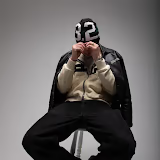 LLoke Made3x Billboard Charting
 SIGHOST8M+ BeatStars Plays
 LitKidBeats18M+ YouTube Views
- TapDaddyBeats1M+ Streams
- Churass MusicMulti-platinum Publisher
- BE-TWIIN Beats50M+ Streams, 1000+ Artists
- Prodbymeadow1K+ Syncs, 15M+ Streams
- Royal808Platinum Producer
- fizzo4911M+ Streams
- LLoke Made3x Billboard Charting
- SIGHOST8M+ BeatStars Plays
- LitKidBeats18M+ YouTube Views