How TCmadethis Built a Publishing Empire from Australia
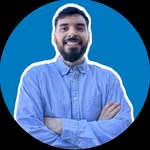
When starting a career in music production, many aspiring producers face the daunting question: how do I get my beats into the hands of artists? In this post, we'll dive deep into the journey of TC, a producer who went from making beats for fun during lockdown to becoming a lead engineer at a commercial studio and signing a publishing deal in the UK. You'll learn about his initial struggles, his strategies for networking, and how he branched out into different genres.
About TCmadethis
TC, known as TCmadethis, is a producer and audio engineer based in Adelaide, Australia. He started making beats in mid-2020 during Australia's first COVID lockdown, and after several years of studio work he became the lead engineer at A-Side Studio, run by A-Side Records. He is now signed to IQ Music Group, a UK publisher whose production roster has worked on records for artists like Ed Sheeran and Burna Boy.
The Journey Begins: Discovering Music Production
TC began his music production journey during the COVID-19 lockdown in Australia. With plenty of time on his hands, he started experimenting with FL Studio, initially creating beats just for fun. Despite having a background in music from playing the piano, TC did not take his production seriously at first. He describes his early days as a time of exploration rather than a career pursuit.
The Influence of Prior Musical Experience
- Understanding Basics: TC's piano skills provided him with a foundational understanding of music theory, which proved beneficial in his production work.
- Creative Flow: Having musical knowledge allowed him to create melodies and understand song structures more intuitively, speeding up his workflow during high-pressure sessions with artists.
From Drill Beats to Diverse Genres
Initially, TC focused on UK drill beats, a genre that resonated with him during his teenage years. However, as he grew, he realized the importance of versatility in music production.
Expanding Genre Horizons
- Why Branch Out: TC recognized that pop and R&B were dominant genres in the industry, prompting him to experiment with these styles.
- Influence of Collaborations: Working with various artists pushed him to adapt and create in different genres, ultimately leading to a more diverse catalog of music.
Building Connections: The Key to Success
Networking is crucial for any music producer. TC shared his journey of building connections and how it played a vital role in landing placements.
Networking Strategies
- Cold Outreach: Initially, TC reached out to artists via Instagram DMs, trying to establish connections. He emphasizes the importance of being genuine and building real friendships rather than just seeking professional relationships.
- Email Marketing: Learning from his peers, TC started using email marketing to push his beats out to a broader audience, using personalized messages to increase engagement.
Securing a Role as a Lead Engineer
TC's networking efforts eventually led to a significant opportunity: becoming the lead engineer at A-Side Studio. His story highlights the unpredictability of the music industry and the importance of persistence.
From DM to Employment
- Serendipitous Connection: After months of reaching out, a connection he made through social media led him to a job opening at a studio that needed an engineer. This fortuitous encounter showcases how persistence can pay off in unexpected ways.
- Trial and Adaptation: TC went through trial sessions to demonstrate his capabilities, leading to a stable role that provided him with consistent income and experience.
Signing a Publisher and Looking After Your Publishing
The same pattern of authentic collaboration is what eventually brought TC a publishing deal. By consistently making music with an artist who was already signed to IQ Music Group, he got noticed indirectly by the publisher's A&R side, who reached out and offered him an administration deal - one where he retains the copyright to all of his work and the publisher simply collects and manages his royalties.
That deal also became his biggest lesson. Going back through his catalog with the IQ team revealed years of mismanaged publishing rights and royalties he had never collected, which he estimates cost him thousands of dollars. His advice to younger producers is blunt: never make compromises on your publishing, no matter how small the song. Set a habit early - if you lease a beat, it's 50% publishing - and keep it.
Conclusion
TC's journey illustrates the unpredictable path of a music producer. By starting with a passion for beats and gradually exploring various genres and networking opportunities, he built a successful career. Aspiring producers can learn valuable lessons from TC's experiences, such as the importance of networking, being versatile, staying persistent, and protecting their publishing from day one.
Frequently Asked Questions
How can I start making music as a beginner?
Start by choosing a digital audio workstation (DAW) like FL Studio or Ableton Live and experiment with creating simple beats. Don't hesitate to learn from others and explore online resources.
What genres should I focus on as a new producer?
It's beneficial to start with genres you enjoy, but don't be afraid to explore different styles. This versatility can help you connect with a wider range of artists.
How important is networking in the music industry?
Networking is crucial as it helps you build relationships with artists and other producers. Authentic connections can lead to collaborations and opportunities for placements.
Esteban Candelario (00:01.78) Alright guys, here we are back with another Producer Theory podcast. My name is Esteban, I'm the host. Today I'm speaking to a producer. His name is TC, goes by T for short. Brother, introduce yourself, tell them a little bit about yourself, and give a quick background.
TC (00:15.16) Thanks for having me on bro. Yeah, so I'm TC also known as TC made this. That's what my name is all over credits. I've been making music for probably six or seven years. I might get memes for that, but you know, probably over the last three to four years, I've been taking it a bit more seriously. I've been doing studio work, obviously been doing beats for that entire period. And yeah, last, last
Esteban Candelario (00:31.848) You
TC (00:44.062) one to two years really has picked up for me in terms of income and especially the scale of projects I'm working on as well. But yeah, no, 100%. I appreciate you for having me on, bro.
Esteban Candelario (00:56.82) Awesome, bro. Now I appreciate you for hopping on. If people understood what it took to make this episode happen, we actually just out of the blue, just like are recording. You live in Australia and I live in the US. So like the time zone difference is crazy. But I know you said in the last three to four years, things have been picking up for you, but can you start from like, know, when you officially started producing and like, what was that like and what were you introduced to as far as like the dolls you used?
TC (01:04.334) Yeah.
TC (01:10.509) Yeah, definitely.
TC (01:22.158) Yeah, so when I first started producing, I wasn't really a producer, do you know what I mean? I was kind of just messing around with things. And I'm sure like, you'd get this all the time, especially with producers around my age, as we all started doing stuff in COVID, just absolutely bored shitless, do know what I mean? So, yeah, I reckon it was probably mid 2020. This was about the time that we had our first lockdown in Australia.
because we had it bit later than the rest of the world because we're in the middle of nowhere. So yeah, I just started working off of FL Studio. I can't even remember how I got to that point where FL Studio was my software. yeah, I just started making beats by myself, just kind of messing around with it, filling up time. And I just really enjoyed it. I mean, the kinds of music that I was listening to at that time as well.
kind of started to get reflected in the kind of beats and stuff I was trying to make and then that kind of sort of morphed into okay maybe I could make beats for this genre, this genre, you know maybe I can try and work my work my way in here and that's kind of how it started and it was nothing serious for honestly a couple of years but you know even even before that you know obviously I've been pretty music focused my whole life you know I played
piano growing up, I still play piano pretty well. So it was more of a natural thing to me that I was just messing around in something music related. But honestly, when I first started, I didn't really think I would take production or digital music that seriously. was more just a thing to fill time, if you know what I mean.
Esteban Candelario (03:08.244) Yeah, now I find it the most interesting when like producers start off as like musicians like playing piano, guitar, or like, you whatever else it is. How do you think like right now how that's affected you like knowing how to play instruments before you got into making beats?
TC (03:22.764) Yeah, it's it's certainly helped and I won't claim I'm a super confident piano player, you know, I know my way around a keyboard. I'm not gonna you know, I'm not I'm not terrible, but I don't know how to you know, work my way around create melodies things like that obviously because there's a lot of fundamental knowledge that just gets carried through. Once you know how to do something you just retain that pretty well. But yeah, I'm not going to pretend like I'm just Beethoven bussing out hella notes out of nowhere. Do know what mean? But 100 % it's
Esteban Candelario (03:49.524) Yeah
TC (03:52.321) It's useful just because you can understand flow, especially around things that are more melodic. So obviously I make a lot of dark type of music, but I also make a lot of pop music and things like that. And genres where it's, you know, more melody focused and, and things like that, just knowing how to get different notes, different chords to mash together. It's just in the back of your mind having that it's always going to help you make
you know, music faster and in a more flowy state, especially in a high pressure situation where you're in a session with an artist, just having that little edge where you can just put something down quickly. It's definitely helped me in a lot of situations. Yeah. And I, and I can't imagine just having none of that fundamental knowledge there. But obviously I know lots of producers as well who have absolutely no theoretical knowledge. were great as well. But for me, it's been helpful in that way for sure.
Esteban Candelario (04:45.565) Yeah.
Esteban Candelario (04:51.166) So then walk me through the process, because you mentioned that you were focused on one genre when you started making music. What were the type of beats you were making and what genre was it for? And then what did you branch out to after that?
TC (05:02.574) Yeah, yeah, absolutely. So I started making mostly UK drill stuff. That's just what I was listening to at the time. You know, I'm not part of that, you know, life or anything like that. It's more just so I was in love with the with the beats and that kind of thing. So obviously completely out of touch with the culture behind the music. But I just love the sound of it. So as a 13, 14, 15 year old listening to just some
big guy from the UK, rapper about hell, was running down his opps, right? You know, I got the juices flowing, you understand what I mean? So that's where I started really, because that's just what I enjoyed listening to, it's what got my energy up and things like that. But obviously, over time, grew up a little bit, you know, I started branching out into different genres, especially things like pop music, just because it's just so universal, I guess.
Esteban Candelario (05:36.948) Yeah.
TC (05:57.923) you know, you can't really hate pop music, whether or not it's a main genre you listen to or whether or not you listen to it at all. know, pop music is just hip hop and pop. They're the two genres at the forefront of the entire music industry. You know what I mean? And it's a definitely a different, you know, pathway to the kind of music I was making originally. it's, you know, obviously there was just some artists I work with just over the years who kind of just
pushed me into that a little bit and especially doing a lot of engineering work, obviously not producing music in a lot of projects, but engineering projects. And a lot of those songs would end up being R &B, pop music and things like that. So it kind of helped me just like ease into it a bit better. And obviously I enjoy making that style of music as well. So right now I'm still making UK drill. A lot of my catalog is UK drill. I still make UK drill, but I would say predominantly the amount of new projects that come in.
Esteban Candelario (06:33.876) Mm-hmm.
TC (06:57.454) predominantly R &B, pop, obviously still a lot of rap stuff, you know, less so drill stuff, more just general hip hop stuff, boom bap, a lot of stuff like that. And yeah, no, now we're just all over the place. I'm just dipping my hand in whatever I can get into or whatever is throwing itself at me.
Esteban Candelario (07:21.94) Yeah, no, that's cool. Especially when you start off from something totally different, like drill and pop is like just like, I don't know, it's just like the spectrum. But so then walk me through that process when you're starting off, right? You're starting off making drill beats because that's just what you liked. So how do you go, you know, you're 13, 14 years old, like how do you go from like making drill beats and then deciding like, I think I'm ready to like send my stuff out to rappers. Like, what was that process like for you?
TC (07:27.42) Yeah, Completely different.
TC (07:48.107) Yeah, so honestly, it wasn't for a couple of years. I had a big catalog of beats, honestly. And it never even like occurred to me across my mind about like how I'm meant to be getting these beats to artists. I was mostly just chucking a YouTube upload out here and there, nothing serious, not really chasing placements or anything like you're talking about. It was more so just as years went on and I started
you know, thinking about how, you know, this is a career option that would be great. You know, I could make like proper money out of this. Not that I had actually made any money at that point, but more so that it was, you know, just a theory in my mind. You know, this could be money and I love doing it. And at that stage, it was kind of like a point where I had to be self-reflective and think, okay, what can I actually be doing to get my beats and stuff?
out to artists and this was probably I would say five-ish years ago so was yeah like I said a couple years into making beats already had a pretty decent foundation I wasn't an amazing producer at this stage of course but you know still growing now of course but yeah it was more so that I already had music and already had beats that I wanted to get out to artists but I didn't really know how to and I just kind of crossed the point where I was like yeah
I've got to start trying to figure out how to market myself and brand myself and actually get my music out there. Otherwise I'm just going to be, you know, I'm going to be sitting in my bedroom, sitting in the fucking, you know, lunchroom at school, making beats. And that'll be that and nothing will come from it. Do you know what I mean? So at first I just started DMing artists on Instagram, hella artists on Instagram. And I'm sure that's, that's pretty much a universal story for every producer on planet earth. know what mean?
But, you know, just obviously being around for a couple of years, I knew a lot of producers just naturally as you do. And I was in this collective originally called Kovac. And this was not a big collective. This wasn't, you know, anything super serious. But I met a guy in there who's, yeah, really, really close with me still. He doesn't do so much music production for other people anymore, more just himself. But a guy called Shem, 808 Shem. And, you know, he...
TC (10:14.976) he had all the source, all the source for the whole collective, do you what mean? And he kind of taught us about email marketing and things like this. And these are things that never even crossed my mind, you know, sending out to, you know, targeting people around an artist or in a label or artists themselves and, you know, pushing beats that you think those artists will enjoy straight into their inboxes. And...
Yeah, I started using this app which was recommended by Sham called Gmask, which was, yeah, I don't know, sending out mass emails. Obviously, yeah, a lot of flaws in that app, I won't lie, a lot of flaws in that program. But yeah, that's how I originally started pushing out stuff. It was just more of a, yeah, I had a lot of instrumentals ready to go and I really wanted to start pushing stuff out and just naturally getting advice here and there from people around me in my circle.
And then yeah, started being more consistent on YouTube, started sending out emails and building an email list, that kind of thing.
Esteban Candelario (11:18.408) Hmm. Yeah, man, I find it funny. Like the the advice you got or the sauce you got was like the most practical thing that everyone can do. Like, you know what I'm saying? It's like, it's like, I guess the foundation for all like, terms of like, cold marketing, I guess you want to call it like people you don't know, and you're reaching out to them. So then kind of, you know, I think when we spoke last time, you mentioned like, eventually, you got to like 25 placements, you know what I'm saying? So
TC (11:26.562) Yeah, yeah, yeah, absolutely.
TC (11:33.325) Yeah.
Esteban Candelario (11:43.282) How did everything fall in line for you? Was there a particular strategy that worked best like DMing artists or DMing managers or just cold emailing everybody? Like, was there something in particular that really stuck out to you that got you a lot of the growth and a lot of the placements that you earned?
TC (11:57.611) yeah, in terms of getting consistent plate placements with either the same group of people or the same people, it was more so the DMing. but less so marketing myself straight away in DMs and more, you know, actually building connections with people. think people underestimate, you know, you hear all the time, sorry, before I, before I go on that, like, you know, build connections with the people you network with and it's.
you know, all this great, great stuff like, if you build real friendships, it's so much more authentic and, and things like that. But I feel like people try to force that often, do you know what I mean? And try to, you know, say, where are from? You know, yeah, I'm from here. We should, you know, get to work straight away. I feel like originally for me getting consistent placements just through, through DMS and things like that, it was, it was building actual friendships and authentic, you know, connections with people.
And it would be as simple as having a conversation with someone about, you know, football, you know, what, what team you support, things like that, and getting to getting to know them. And obviously, because I do a lot of work in the UK, Australia and the UK, we have a very similar sense of humor in terms of banter. So it would always be a little bit of us taking the piss out of each other, making fun of each other, that kind of thing. And
you know, just that level of authenticity, not that it was, you know, me trying to be authentic, but it was that it was genuine authenticity and builds that connection, with, with certain artists and things like that. And there were little groups everywhere where I would just, you know, enjoy speaking to a few rappers here and there. And those are the kinds of artists that I would do repeat work with often. but in terms of bigger projects, most consistently, pretty much all of my bigger projects, honestly.
came from cold emailing. And that shocks a lot of people when I say it because I feel like a lot of people struggle to really, you know, break through or convert cold emails, at least, you know, consistently or with big projects, unless they have a massive, massive email list, you know what I mean? But I couldn't give any specific advice around that. was more so that I got placements from a lot of different areas, but it's just...
TC (14:15.47) The size of those projects and also the consistency at which I got those projects really vary just based on the method, based on how personalized it was versus how many people I'm getting beats out to. Do you know what I mean? And usually the larger the scale of people giving stuff to and reaching out to, the bigger the project generally was. But the more personalized, obviously the more consistent and repeat that I'm making projects with the same people. Do you understand what I mean?
Esteban Candelario (14:42.644) Yeah, I guess it's really what you're looking for. Are you looking for consistency or are you looking for bigger placements? I guess like, know, yeah, sometimes you end up with both. So, you know, with that consistency, you kind of ran into the job that you currently have. you're, correct me if I'm wrong, you're a lead engineer at a studio right now.
TC (14:48.952) Yeah.
TC (15:00.642) Yeah, yeah, I'm a lead engineer at a A-side studio. So they're a studio based on the north side of Adelaide. It's probably one of maybe four commercial studios in the city, is, music industry is not massive in my city, nor is it my country, to be honest. But yeah, lead engineer over A-side studio, which is owned and run by A-side Records, which is a super, super nice role to have, especially after working there for a couple of years, yeah.
Esteban Candelario (15:30.546) Nice. So before you started working there, like how did you even like land that opportunity and what did that look like for you?
TC (15:37.581) You know, absolutely. think I've spoken this story before, but this is a bit of a wild one, I can't lie. So I saw on Instagram a random ad, completely random ad, just some drill song by an artist called Coadetti. And as you do, as a producer, you see an artist posting a song and instantly you're on that. You're DMing that artist like, yo, what's up? I'm this person. Let's get to work. Yadda, yadda, yadda.
And essentially I got aired for, I reckon about six months by Coadetti. And obviously me and him were super close now, but at the time it was like, it was a bit of a, whatever, this artist just doesn't want to work. You you get rejected all the time as a producer. It's just normal. But yeah, randomly six months after I send this initial message trying to work, he was like, yo, what's up bro? My studio is looking for engineers. Hit up my boss. He just dropped the phone number.
in my DMs. I'm like, fucking steady on. right. Like, but you know, right after right after that, I am sorry, bro.
Esteban Candelario (16:40.126) You
TC (16:49.87) Right after that, I gave this number a call. It was a guy called Ace. So he's the owner of the studio itself. And at the time he had a record label, which is less of a thing now. It's more just a studio. But he had a record label and Coadetti, that artist that I DM'd, was signed to that record label. And their old engineer, he hadn't had a falling out or anything, but they just had some professional disagreements and he decided he didn't really want to work at that studio anymore.
just to deal with other things in his life, which is, you know, unrelated. But they were out an engineer, you know, they didn't have an engineer. So they were looking for someone pretty desperately because, like I said, music industry is not massive in Adelaide. So there's not really a surplus of engineers, but you can just chuck an ad on LinkedIn or put up, you know, a post in, you know, the news and say, yo, we're looking for employment here. There's not a lot of people that are going to come ring in your phone. Do you know what I mean? So yeah.
I went in to the studio, I met Ace, obviously after giving him a phone call. We just spoke back and forth a little bit. You know, there was a few trial sessions I did, just running sessions with the Just The Boys, you know, that I signed to the label, meeting everyone, making sure I'm comfortable, and that kind of thing, making sure I'm capable as well, which, know, obviously I ended up being, hence why they hired me. yeah, it was...
A really weird story from going from this ghosted DM to then this employment that I still have two and a half, almost three years later. And now I'm working three days a week at the studio doing 10 hour sessions or 10 hours of sessions on all three of those days. And, you know, that's a nice little, you know, consistent income for me. A lot more predictable as well than obviously just production stuff. But, you know, definitely.
more sporadic and a bit of a random way to get a job for sure.
Esteban Candelario (18:50.868) Yeah. And I think that's how like a lot of people are going to interpret it as like randomness, but you know, I think, I think it worked out for a reason. And I say that because, um, before, before you hit him up, you probably didn't have as nearly as many placements. And then when he did hit you up, you probably had much more placements and maybe he heard you, I don't know, some way, some, somehow maybe he heard his music that you produce or you engineered or the timing was just great. Either way you cold DM them. And if you never did that and he can never left you on red.
TC (19:04.824) Mm.
Esteban Candelario (19:20.212) Who knows, he probably would have never known who you are. So like it is sporadic, but I think ironically, if he did get back to you at the time you DM'd him, maybe you just weren't ready for that moment. You know what I'm saying? And then, know, things, yeah, things work out, things work out in that way. And I kinda, hope like people get that from that story. Like DM them, even if you think they're not gonna like get back to you, it doesn't matter how big they are, how small you are. You just never know, especially in the future. So, kinda.
TC (19:20.836) Mmm. Yeah, 100%.
TC (19:30.542) Yeah, no, 100%. Yeah.
Esteban Candelario (19:45.288) Talk about your journey going, starting from when you were working at the studio as an engineer. Is that when you started to enter like the other genres like R &B and pop and did you like start working with other artists?
TC (19:56.847) Yeah, yeah, a little bit, definitely. So obviously in terms of production, even for, you know, when I was still working at the studio, was primarily like just starting working at the studio. mean, I was still primarily just making, you know, the drill beats, hood trap beats, that kind of area and niche, if you know what I mean. But yeah, obviously because I wasn't in control of all of the bookings at the studio. You understand what I mean? There were other clients that were booked.
Esteban Candelario (20:21.076) Yeah.
TC (20:23.176) not only by things like booking agents and managers, but also by Ace himself owning the studio, also getting referrals of friends of friends, they're not all making the same type of music, and all these different people, they're not all drill artists, you know what I mean? Naturally. And I would get a lot of R &B, a lot of R &B music, and a lot of pop music as well, a lot of indie music, especially doing a vocal recording and things like that.
And obviously I'd still get a lot of rap as well, naturally. But, you know, it was initially just running these sessions and recording this music that kind of pushed me and just irked me a little bit into these different areas and genres. It kind of opened my eyes a little bit into getting involved in projects that weren't necessarily just, you know, the niches and areas that I focused on or hyperfixated on.
Yeah, and kind of helped me branch out a little bit to where I then started to pursue engineering in those genres. And then I also expanded eventually into producing in those genres and things like that. And obviously I still have my pockets and niches. think pockets and niches, especially when you're dominant in something or really good at something is great to think to have. It's a great thing to market yourself with and brand yourself with. But being able to expand and being able to demonstrate versatility and also that your skills are interchangeable.
across a lot of different genres or even different areas of the music industry, not necessarily producing or engineering, is an important thing to be able to do. And for me, that was transitioning from just doing drill rap into doing pop music to doing R &B music and things like that.
Esteban Candelario (22:07.092) through the studio, did you ever like run through artists that you ended up working with and like growing with and those artists started becoming, know, bigger or growing, whatever the case is, or, you know, how's that?
TC (22:17.836) Yeah, absolutely. So obviously, Coadetti, the original artist that reached out to me, well, I suppose I reached out to him. But yeah, that we initially connected with. Yeah, over the course of probably two-ish years, I worked on pretty much every project he did, and he went from getting about 10,000 streams a song to almost...
Esteban Candelario (22:26.993) Yeah.
TC (22:44.27) three, 400,000 streams a song, which was really good to see, especially for an artist in Australia. Obviously pushing big marketing budget behind him, big branding. And yeah, to see him go from basically this little local guy to expanding into something that's just a little bit more than that, if you know what I mean. It was really great to see, especially because...
Like I said, I worked on all his projects. So I was working on his projects when he was doing 10,000 streams. I was working on his projects when he was doing 30, 40,000 streams. And I was working with him, you know, still now where, you know, a lot of his songs are in, you know, well into the hundreds of thousands of streams, which for an Australian artist, obviously in the grand scheme of things is not massive, but for an Australian artist, is, yeah, that's numbers here. I think people, yeah, overestimate how big...
especially creative industries are in Australia because we have some big names here and there. But yeah, the industry here is really small. So those are big steps, especially for Adelaide as a city.
Esteban Candelario (23:47.189) So that must mean like artists like Kid Leroy are just like beyond superstars in Australia. Because they're like, he's a superstar in America. So I can imagine like in Australia must be like a totally different. Yeah, that's crazy. What about any like outside of the drill, any pop artists or any R &B artists that you work with that also grew, that you also grew with with their sound and development?
TC (23:54.647) Yeah, yeah, absolutely, absolutely. Yeah, they just outliers for sure.
TC (24:10.06) Yeah, absolutely. I did, obviously, like I said, as I started working on more projects in the studio, engineering, like pop music and R &B, I started to pursue those projects more as an engineer. And that wasn't just in booking sessions in Adelaide, that was also working with artists interstate across Australia and things like that. And I actually ran into this artist, a super young singer called Ali Kate.
And you know, she had an incredible voice. She was super young at the time, I think 14, I think she's 15, maybe 16 now. So she's still like super young artist, you know what I mean? But yeah, originally one of her engineers that she was working with, she just couldn't get a hold of anymore. So she reached out to me because she saw me on someone's story somewhere. I'm not exactly sure to be honest, but she just reached out to me and said, yo, I have this song, can you do it? I'm, you know, 13, 14.
you can I just send it and you mix it? I don't have any money for it. can do splits and obviously, you know, splits for an artist of her size at that time was like nothing. It was more so that I was trying to, you know, pursue more projects in, you know, those kinds of genres. I was like, yeah, you know what? Fine. Let's just do this. Obviously she's a little kid. She's got this, you know, song I'm sure is, you know, just fine. Engineered that song. That song was called, I can't remember the name of it actually.
But it featured a Canadian artist called our baby Bennett as well. And that song was relatively small. think even now it's got like, you maybe 10,000 streams, like nothing, nothing massive. But that kind of started a, you know, an artist engineer relationship that really expanded over, I want to say not even a full year because obviously Ali being young, she was super, super marketable and
has all the time in the world when you're like that young, you know what I mean? So she was posting content constantly, going viral constantly. And she went from about 80 followers from when she first reached out to me to, I don't know, maybe 60, 70,000 in a matter of, yeah, maybe eight or nine months. And I think now she's, yeah, 120, 130,000 on TikTok or something like that, which is absolutely ridiculous, but.
TC (26:38.85) Yeah, I was essentially doing all her early projects up until very recently because now she's been signed by Universal Music Group over here in Australia. She gets flown all over the country to go to specific studios to work with specific producers and things like that. Obviously I still do work with her, but not as continuous as I once did because obviously she's pursuing a lot of new opportunities, working with a lot of new people, which is great. But seeing...
that initial growth from doing just some free engineering work, they're just a mess around in a genre that I just wanted to expand into. And then over, even the course of a year, seeing that artists go viral and have songs with millions of streams is really great. It was really great. But yeah, she's definitely an outlier from a, I was here from the start kind of perspective.
Esteban Candelario (27:32.276) Yeah. Did you hear that potential in here? from the start when you first engineered her, like were you like, okay, this could be something or like, what was that like first impression?
TC (27:41.551) Yeah, she had a great voice, but she sounded like a kid, if you know what I mean. it wasn't so much that I didn't think that she wasn't going to go anywhere. It was more so that it's like, oh yeah, this is just a kid at the moment. We'll see what happens. And like I said, amazing voice. And obviously as she started to grow a little bit more and obviously she's matured a little bit, obviously a few more years into those teenage years. And you start to get a little bit...
Esteban Candelario (27:47.038) mhm.
Esteban Candelario (27:58.664) Yeah.
TC (28:10.658) bit more brittle in your voice, a bit more development in your voice and things like that. You know, it was obvious that she's insanely talented, but at the start, you know, it was like she was insanely talented, but it was insanely talented for, for someone her age, if you know what I mean. And yeah, and there's, yeah, there's kind of a difference between being like you have it and being someone who's just amazing for the place they're at in that moment in time. And obviously I saw potential from the start, but I'm not going to say like,
Esteban Candelario (28:24.776) Yeah.
TC (28:40.15) I was, you know, absolutely gunning for her and thinking she was going to be the next superstar. And honestly, from where we are now, it is looking like she's going to be the next superstar out of Australia. And I really, really hope that is the case. Yeah.
Esteban Candelario (28:41.812) Yeah.
Esteban Candelario (28:54.356) Was she the artist that won an Australian Music Award too?
TC (28:57.772) Yeah, so she won an ACMF award, is like a... It's like a... It's not a massive award, but it's like stepping stones, if you know what I mean. It's like it's a national award, so it's good. She won it for a song called Dear Dad, which obviously, you know, I'm not going to tell her story, but she's had an amazing upbringing, especially in terms of a father figure. And that's what that song was about.
Esteban Candelario (29:07.284) Yeah.
TC (29:23.79) And that came from, you know, someone in their early teens. So it just touched a lot of people, I guess. And it was really received really, really well. And, you know, obviously, yeah, it went went through to win that ACMF award, which is kind of like it's the it's a baby brother of a bigger, bigger music award we have over here in Australia. More more of like an independent artist kind of award. But no, it was absolutely great. And obviously still got, you know, a national reception for that, which was
really, really great. Yeah, she got radio play for that and everything was really, really good right after we won that award, especially for myself being able to market myself as, I'm the engineer that did this song, know? But yeah, yeah, 100%.
Esteban Candelario (30:04.628) Yeah.
That's cool. guess in America we have like the Grammys. So I guess it's like a pre-Grammy or like a mini Grammy for independent artists, I guess you would say.
TC (30:14.584) Yeah, it's like the Australian version of the Grammys for independent artists, kinda. Yeah, yeah.
Esteban Candelario (30:19.22) Okay, that's cool. So, you know, I find it like so far like the theme of like your life and like how you've ended up in these places all starts from like some form of communication through like social media so far is what it sounds like, you know what I'm saying? And it kind of sounds like you're always ready to take the opportunity. Even if the opportunity isn't going to benefit you 100%, you just saw it as like a new lane, young kid, like why not? Like, you know what I'm saying? And I think most producers will probably pass on it. Like if I'm going to be real, most people would
TC (30:32.449) Yeah, yeah.
Esteban Candelario (30:48.008) think like maybe it's not like I shouldn't consider it for my time but you took it and then it turned into something else and I don't know I mean what do you think about just like do you believe in always taking an opportunity like do you still think like that now even though you're more established or do you kind of like weigh your opportunity differently when they come to you
TC (31:04.972) Yeah, that's actually a great question. And my answer is actually no. I don't think always taking opportunities just because they present themselves is always a good thing. feel like as a producer, you have limited resources and that's in, you know, obviously your skills, the, you know, instrumentals you make, your abilities as not only a producer, but as a person as well.
but also your time. So I feel like you have to pick and choose what you work on because obviously, especially when you're trying to make producing or engineering, you know, a career and earn a little bit of money out of that, you've got to pick and choose times where you have to prioritize making that money over, you know, pursuing a project that you might do for free and it might turn out great. It might not turn out great, but I guess it's just the identification.
Esteban Candelario (31:36.734) Yeah.
TC (32:04.334) of opportunities that you think really have potential and that you believe in or that you think are beneficial to you or your career separately. Do you know what I mean? for you, would be like Ali, for example, I did that pop project because I wanted to expand into engineering and mixing more pop music. So that's why I took that project on. Or if I was trying to do something for my career, it would be maybe
doing some free engineering work for a large artist, just doing assistant engineering or things like that, just so I have something that I can put on my portfolio and say, yeah, I did work with this guy. And then that becomes a selling point for when you're actually trying to make money again in the future. But yeah, there's definitely been opportunities which I've really, really missed out on, which have been a bit of a bummer, which is, it's always why.
Like I said, pick and choose opportunities, but really consider everything that's presented to you. And yeah, the big example for me was artists called T-Cans. I don't know if you know this guy, but he just had a massive record called Now or Never. Went super viral on TikTok. Just had a little baby feature on the remix song. Like, yeah, mental song absolutely blew up like.
on hundreds of millions of streams in less than a year. And he was already like a mid-size artist in the UK, and I've known this brother for a long time. And he asked me to mix and master his EP for him and wanted to do it on a point split basis, for master's points essentially instead of payment. And I said, oh no, we'll figure something out.
because I need a little bit of payment for it or something, but we can meet in the middle somewhere. And, you know, it's not that he was unhappy with that, but it's just that he couldn't afford that at the time, which is completely fine. But fast forward, he previewed one of those tracks that was meant to be on that EP and that song was Now or Never. And I was just like him freestyling it in his car. And yeah, the overnight, the Instagram reel, it just like went.
TC (34:25.25) you know, pretty crazy locally, like, you know, a hundred thousand views kind of thing. And at that point, another engineer actually picked it up and did that work. guy called KM, think, who, you know, love to him as well. I've done a few projects with him indirectly and things like that. So, you know, he's done well there because he spotted a song that he really believed in and he pursued that, which is something that I probably should have done if I consider that opportunity better. But fast forward.
You know, that song has hundreds of millions of streams and I've missed out from a master's points revenue perspective, probably tens of thousands of dollars, you know what mean? So it's one of those things where it's like, bugger. But, you know, if I could go back and change it, of course I would, but I'm not gonna, you know, bite myself over it or, you know, beat myself up because, you know, make mistakes, always, you know, grow and learn and things like that.
Esteban Candelario (35:04.02) Mm-hmm.
TC (35:24.684) And it's just like, that's been a lesson for me now. It's like, well, I've got to really be considering all the opportunities that are presented to me equally, not just brushing things off or trying to push a little bit. You know, sometimes if there's a great opportunity in front of me and I'm just not really focused on it, I can miss things. And that's a prime example. Yeah.
Esteban Candelario (35:48.703) shit happens, man. You don't win them all. You know what I mean? But cool, but cool. No. Yeah, I'm glad you shared that because I've only heard like the randoms, variety successes. I don't think I heard that story from you last time we spoke. That's awesome. Now, I kind of want to go and correct me if I'm wrong. You got signed to a publisher or distributor and you know, what was that journey like and like getting introduced, you know, to even getting to where you're at, signed with them and like, you know, how was that?
TC (35:50.168) Yeah, Yeah, yeah, moving on.
TC (36:01.911) Yeah, yeah.
TC (36:17.058) Yeah, yeah. I got, recently, I want to say about three and a half-ish months ago, I signed to IQ Music Group, which are a big publisher over in the UK. You know, they've worked on, you know, tracks and done publishing for Ed Sheeran, Burn A Boy, things like that on a, on a production side. So they do almost exclusively publishing just for producers, but obviously, you know, indirectly I've worked with some massive, massive artists across the world.
and they've done billions and billions of streams. Which is, yeah, it was super exciting when I first got approached by them because again, it was a bit of a random, a bit of a random one because I got kind of referred to them by another producer, guy called Segway, who I think he lives in California in the U.S. but he does a lot of UK drill production. He does a lot of like sampling type stuff, if you know what I mean.
So yeah, I just made a bunch of labs with Segway and he was putting them on Instagram and things like that. And obviously Segway was already part of this publishing group. you know, me just working with him constantly. Obviously the guys at IQ are seeing what he's doing because they're, you know, they're signed to him. And indirectly they're seeing me. And I started getting followed by this guy called Ben Reed. And I noticed that
you know, not a lot of people followed him because he was more of an A &R management kind of behind the scenes guy. But I did notice that Segway was following. So I asked him, it's like, who's this? It's like, yeah, that's, that's Ben, bro. He does management over IQ music that he, you know, manages all my publishing work. And I'm like, yeah, swear. And I didn't really think a lot of it, think, you know, much of it at the time. But yeah, a few days later, Ben actually reached out to me and I'd learned that, you know,
you know, he'd been basically indirectly referred to me by Segway. And he said, yo bro, are you published at all? basically are you signed to a publisher and have you got all your works published, you know, officially with a, you know, a PRO. And I was like, look man, no, I actually, I'm not published at all. And I know I probably should be, but I haven't really looked into it. haven't really, you know, explored that area of the music industry. And he basically just gave me his phone number. We had a bunch of, you know,
TC (38:44.184) I would say brief conversations, but they weren't very brief. I'll be honest. They were quite lengthy, but, yeah, no, just over, over a couple of weeks, I got to know this guy, what they're about. And he said, look, we're looking to expand our roster. And obviously I had a lot of streams on a lot of, you know, projects that are produced on. And because I was unpublished, essentially they just like royalties floating up in the air, just waiting to be claimed. And he's like, look,
We want to bring you on board to IQ and we'll go collect with those royalties for you. They gave me a very fair deal. I won't go into the terms of the deal, it was, yeah, it's generous what they, they offered me, especially because it was an administration deal. So obviously they can pull that at any time and I can put it at any time, but no matter what I retain the copyright to all my work and all that, all things like that, they essentially just manage my publishing. They don't own any of my publishing, which was
you know, that's how you want your publishing to be set up. But yeah, it basically just turned from this thing where I was just making a couple beats with Segway and then a bit of back and forth and suddenly I've got this A &R manager and, you know, record label dude hanging out in my DM trying to see what's up. And yeah, obviously from there we took it and made something happen.
Esteban Candelario (40:02.642) Heh.
TC (40:09.888) And yeah, like I said, three and a half ish months ago, signed to them and they've been amazing so far. Chasing up a lot of, you know, projects and issues that I have with my current catalog that were just mismanaged or not managed well at all. Because I wasn't really taking very good care of my publishing rights, let alone actually collecting what I was owed in publishing royalties and things like that. But you know, they've been great. But yeah, that's how that all came about. Yeah.
Esteban Candelario (40:39.22) Were you, when you reached out to me, you skeptical at all?
TC (40:43.892) Not really because like I said, he didn't have like a lot of mutuals with me, but pretty much all of the mutuals he had with me were people I trusted and worked with quite a lot. And obviously there's shady people in the music industry everywhere and always, but you know, just reviewing the contract that they offered me and based on the conversations I had with him, he seemed like a genuine person.
not just, you know, from a business perspective, but, know, just like man to man, seemed like a good guy. Do you know what I mean? and I guess, you know, that, that's how fishy people want to come across, but, you know, just having, having conversations, conversations with him and obviously having that backbone of trust where it's all these people I trust are also around him and involved with him in business. It was, yeah, I didn't really have any doubts. He was trying to screw me over, but yeah, did my due diligence on the,
Esteban Candelario (41:17.406) Mm-hmm.
Esteban Candelario (41:21.652) Ha
TC (41:40.984) Contract for sure, yeah.
Esteban Candelario (41:43.551) Yeah, that makes sense, especially it's a lot easier to trust people when you have like the referrals or when they know people mutually, it makes it a lot easier, you know? I kind of want to talk about like the idea of, you know, one, like reaching out to artists, but I want to ask you in your opinion, because I know some people have different ways of doing it. Some people reach out to artists directly. Some people reach out to the people around the artists. And I kind of want to ask you like, you know, from your perspective or from your experience, what's the
TC (41:48.558) Mm.
100%.
Esteban Candelario (42:12.584) What's the best way? Do you prefer reaching out to the artists directly or reaching out to the people around them or a little bit of both? Like what's that process like for you?
TC (42:19.736) You know, absolutely it's a combination of both, but it really depends on artist size. So if I'm trying to reach a specific artist or that is like particularly unattainable, you know, I don't have any connections, don't have an email in their bio, they don't have a manager I can reach out to. I'm usually going to go straight to the people around them, the people that they're following that are artists as well, that are more attainable, that I could tap in with and indirectly kind of...
try to weasel my way into kind of that little music circle. But at the same time, also starting off by working with an artist directly and then branching out to other people that they are also surrounded with is another way that I've got a lot of work and a lot of consistent work, especially obviously, big projects are great. Big projects are amazing. They're, you know,
the main focal point of why I do production. I want to work on the big song so does everyone, you know what I mean? You know what I mean? Like everyone wants the hits. But at the same time, you've got to have some level of consistency. You've got to have, you know, just a level of workflow that's constantly coming in. So you're just not stagnant, sitting there doing nothing. And I found probably the most effective way to do that is working with
artists who are medium sized that I'm really tapped in with that I really enjoy being around and then reaching out to their friends, reaching out to artists around them and things like that because you know once you're tapped in with an artist that is not massive but has a little bit of a following, you working with that person constantly kind of holds a little bit of weight and it makes it really really easy for you to expand outward and kind of you know reach out and start working with people in you know their network and their social circle and
you know, people that go to the same studios as them, other producers that work with them and things like that. And it makes it a lot, a lot easier because you know, you're the guy that does work with this guy and you know, they know that person too. Amazing. Let's get some work done. Do know what I mean? It's a lot easier than just going, yo, I'm a producer from Australia. Let me send beats bro. It's, know, a lot more connected and a lot easier to just flow from person to person. And then also just have that be more consistent.
TC (44:40.206) and connect with even those other people around that first artist better as well. then obviously from there, you go from one network to one network to one network and it just expands onward and onward and things like that. Yeah, for sure. So my answer would be both target artists and target people around the artist, but it really depends what you're going for and why you're targeting.
certain artists or certain people around an artist, yeah.
Esteban Candelario (45:11.925) You mentioned like medium size. Can you define what the medium size artist to you more specifically?
TC (45:17.26) Yeah, medium size artists to me would be, it's actually not so much about size in terms of following and you know, monthly listeners and things like that. Obviously it's a factor, but it's more so the level of consistency, the level of seriousness that I see in an artist, the branding of an artist, whether or not I see them investing proper money into themselves. And that's not necessarily just that investing a bunch of money into.
TC (45:50.883) you know, not necessarily investing a bunch of money into like producers, engineers and things like that, but, into videography, into, you know, just their marketing in general, because they're just a medium sized artist is just someone who I can see that takes their music seriously and has a little bit of momentum. It's not necessarily someone with 10,000 monthly listeners or a hundred thousand monthly listeners or 50,000 monthly listeners. It's just someone that I can define as, know,
has all the things about them that if they were a bigger artist, they would be able to maintain themselves and make a career out of their music, if you know what I mean. That's how I define it. A bit complicated for sure, but yeah.
Esteban Candelario (46:36.815) Yeah, yeah, I like producers I speak with, I work with, I always tell them like to see how serious an artist is. So like if you had to like, if you let's you found an artist that was ideal for you, like followers and monthly Spotify listeners, and you had to like look at like how serious they were, like what things that would stand out to you to be like, okay, this guy looks pretty serious, like somebody I can work with probably because they look serious.
TC (46:59.224) Yeah, for me, it's obviously production and engineering is one thing because if you've got the music patterned, you're great. If you've got great music, amazing. But at the same time, that's just one factor. I would say getting good videography, shooting good reels, posting reels consistently as well is a really big thing. If people are inconsistent in posting and advertising,
and marketing themselves. You how am I expecting someone to be a consistent client or a customer that's going to be a repeat buyer? You know, if I can add value to you as an artist, but you can't even put that, you know, that value that I add to you and advertise that properly to then earn your money back from that. It's like, why would I spend my time pursuing you? Because, you know, it just seems like, you know, if they're, if they're unserious,
about their own brand, they're not going to be serious about working with me consistently. So they're not the kind of people that I would be, you know, chasing constantly. Of course there's, you know, there's a billion artists that make great music, but there's probably a million that make great music, have good marketing, advertise themselves properly, make sure everything about their brand and their image is marketable and patterned. And, you know,
If an artist doesn't have a lot of those key factors, it just makes them look unserious and it kills the motivation a little bit to pursue that relationship. But of course, when it's patterned and it's great and they've got everything, it's like the light turns green, do you know what I mean? Everyone's after that artist.
Esteban Candelario (48:44.67) want to ask you something like that begs the question, like what's more important to you when you're reaching out to artists, good music or great marketing?
TC (48:54.342) I think more important is marketing because I can add value on the audio side. Do you understand what I mean? I can't add value on the marketing side. you know, I'm not going to pretend like I'm going to turn some absolute shithole artist into the next Drake. You know, I'm not going to pretend like I'm some absolute whiz kid, wonder kid. I was turning everyone into the next smash hit, you know, artist, but I know my strengths.
Esteban Candelario (49:06.665) Yes.
Esteban Candelario (49:12.468) Yeah.
TC (49:23.788) and my weaknesses and my areas of expertise. And I know for sure that marketing, creating real content, know, advertising, that's not my area. I can't do anything for them there. So if they've got that pattern and they've got okay music or good music, but it just needs touching up or things like that. I know that I can add that value there and come in and hopefully make a complete product on both sides where they're marketable and they've got a great product. Yeah.
Esteban Candelario (49:50.805) That makes a lot of sense. All right, bro. think from my end, I think that's all the questions I got, but I just want to ask this last question, kind of something I've been doing with a lot of the producers, this last final question. it's, what advice would you give yourself if you could go back to when you started, like back in 2020, that you think would help you a lot more or get you to where you would be a lot faster?
TC (50:19.63) I would say two primary things. One basic thing, which is a little bit cliche, but have confidence is one thing. Do you know what mean? I never like to come across as cocky or, you know, I don't want to come across like a dickhead, but, you know, having confidence in my product and what I do is so important.
And if I would have had that across the whole time that I would have been making music, I would have been able to market myself and push myself into different circles and areas of the music industry so much easier from so much earlier that, you know, like where would I be now? Like I'm in a good spot now, but I might be, I could have been in a great spot, if you know what mean. And then, yeah, my main piece of advice, this is more of a knucklehead thing is yeah, look after your publishing. It's really important.
Um, you know, when you're starting out, it's, uh, you couldn't give less of a fuck. Do you know what I mean? About, about your publishing. It's like, oh yeah, this is just some, this is like part of the royalties of some of the songs of just the things I produce on. It's like, oh yeah, whatever. Just put that to the side, ignore it, which is what I did for so long up until honestly, very, very recently, but obviously signing to IQ has opened my eyes and obviously we've had to go through all of my back catalog and all my other songs and I've
I've really noticed a pattern that there's just so much mismanagement that I've done around protecting my publishing that has lost me like thousands of dollars, I'll be honest. And that's obviously something I'm working with a team at IQ to fix and all that thing. And obviously I'm patterning my publishing now, making sure I'm taking care of everything. But if I could go back and tell myself something, it would be...
to yeah, look after your publishing. What you are owed is what you should always retain and what you should keep. You should never make compromises on publishing. It doesn't matter if the song's small, if the song's big. Just getting into a good habit of just saying, yeah, if I'm leasing a beat, it's 50 % publishing. Leave it at that. And yeah, just looking back on a lot of projects, I've not done that very well at all. But yeah, that would be my big piece of advice for sure.
Esteban Candelario (52:42.802) Nice brother. So just tell where they can find you. Instagram, X, wherever, whatever your handle is.
TC (52:49.438) Yeah, yeah, you can find me on Instagram at TC made this with two s's at the end Yeah producer Mixing mastering engineering based in Adelaide, Australia. I do everything hit me up for sure hundred percent down to it with everyone But yeah, I'm pretty much on the active on Instagram. I'll be honest
Esteban Candelario (53:09.204) Thank you so much for having on bro.
TC (53:11.534) 100%. Thank you.
 Producerfury
Find artists that fit you
Prospects matched to your sound, size, and location.
Turn them into connections
Personalized DMs, follow-ups, and guided outreach.
Keep relationships alive
Automatic packs by email and reminders to reconnect.
Loved by 3497 producers
 TapDaddyBeats1M+ Streams
 Churass MusicMulti-platinum Publisher
 BE-TWIIN Beats50M+ Streams, 1000+ Artists
 Prodbymeadow1K+ Syncs, 15M+ Streams
 Royal808Platinum Producer
 fizzo4911M+ Streams
 LLoke Made3x Billboard Charting
 SIGHOST8M+ BeatStars Plays
 LitKidBeats18M+ YouTube Views
- TapDaddyBeats1M+ Streams
- Churass MusicMulti-platinum Publisher
- BE-TWIIN Beats50M+ Streams, 1000+ Artists
- Prodbymeadow1K+ Syncs, 15M+ Streams
- Royal808Platinum Producer
- fizzo4911M+ Streams
- LLoke Made3x Billboard Charting
- SIGHOST8M+ BeatStars Plays
- LitKidBeats18M+ YouTube Views