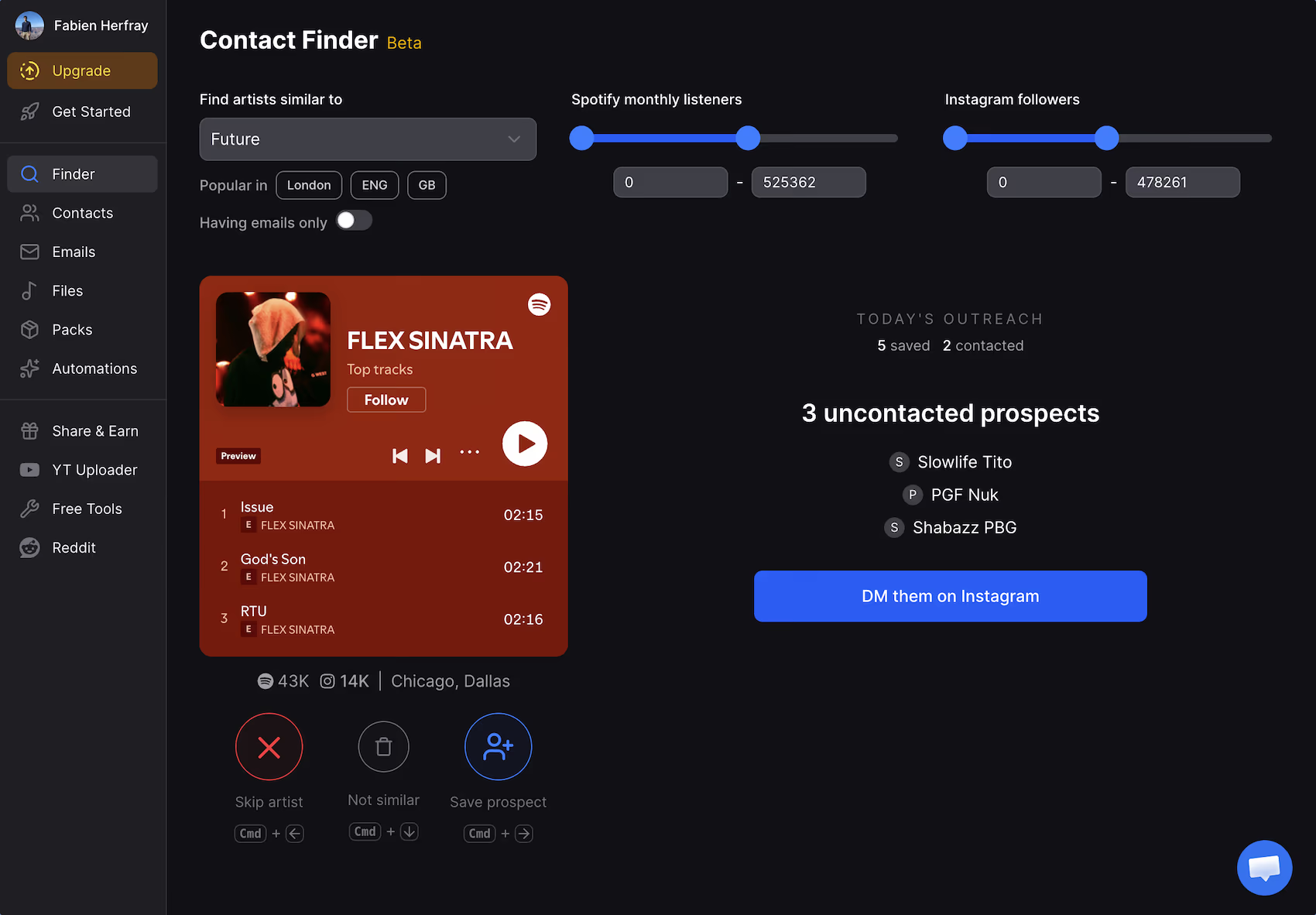
EP 2: Navigating the Producer Journey: From Doubt to Success
In the world of music production, the path to success is often filled with challenges and learning experiences. In this post, we'll explore the journey of Thomas aka TK808, a producer from the Netherlands, who shares his insights on overcoming obstacles, honing skills, and the importance of networking. If you're aspiring to make a mark in the music industry, this post is for you.
About TK808
Thomas Kumru, known as TK808, is a passionate music producer from the Netherlands who transformed his dream into reality. After pursuing a traditional education in law and public administration, he decided to follow his passion for music production. With years of experience, he has valuable insights into the industry that every aspiring producer can benefit from.
The Journey of a Music Producer
Thomas's journey began with a fascination for beat-making that he nurtured through online tutorials and self-education. He faced fears of failure and self-doubt, which many creatives relate to. However, his determination to pursue his passion led him to take the plunge into music production full-time after graduating in 2018.
Embracing the Learning Curve
Starting from scratch, Thomas immersed himself in learning the technical aspects of music production. He emphasizes that mastering mixing and mastering techniques is crucial. "A good mix can make or break a beat," he states, highlighting the importance of understanding sound dynamics.
First Successes and Challenges
Thomas's first major breakthrough was landing a placement with a British artist. This achievement was a turning point, demonstrating that persistence pays off. However, he also shares the emotional struggles that come with the highs and lows of the industry, including moments of self-doubt.
The Importance of Networking
One critical aspect of Thomas's journey is networking. He stresses that getting your music heard is just as important as the quality of the sound. "Unfortunately, the marketing is more important than having a unique sound in today's industry," he says. Thomas emphasizes the need to step out of comfort zones and connect with others in the industry.
Building Connections
Thomas advises aspiring producers to seek out networking events and leverage platforms like Instagram to connect with artists and fellow producers. He believes that every interaction has the potential to lead to valuable opportunities.
Key Takeaways
- Pursue Your Passion: Don't be afraid to follow your dreams, even if it means taking a non-traditional path.
- Master Your Craft: Invest time in learning the technical aspects of music production, especially mixing and mastering.
- Network Actively: Attend events and use social media to connect with others in the industry. You never know who might open a door for you.
By learning from Thomas's experiences, you can navigate your own journey as a music producer with more confidence and direction. Remember, every producer's path is unique, and embracing the journey is part of the success.
Frequently Asked Questions
What should I focus on as a beginner music producer?
Focus on developing your sound and understanding the technical aspects of production, such as mixing and mastering.
How important is networking in the music industry?
Networking is crucial; it helps you connect with artists and other producers, opening doors for collaboration and opportunities.
Can I succeed as a music producer without formal education?
Yes, many successful producers are self-taught. Dedication, practice, and networking can lead to success without formal education.
Esteban Candelario (00:01.559) All right, the first official Producer Fury podcast. My name is Esteban. If you don't know me, I offer one-on-one mentorship to, you know, producers and help them make an extra income from selling their beats and getting artists as clients. I'm with Thomas today, who is also a producer. He actually goes back with the creator of Producer Fury. His name is Fabian, if you guys aren't familiar with him. He actually met him before Producer Fury was created. It was just an idea when he met Fabian. So with that being said, nonetheless,
I'll let Thomas introduce himself, tell us a little bit about yourself and like, you know, how the journey has been as a producer.
Thomas (00:33.741) Yeah, thanks for having me, man. So yeah, my name is Thomas. I'm from the Netherlands, born and raised over here. I always dreamed of being a producer, you know, like I always been watching videos on YouTube with producers making beats from scratch, you know, I was always fascinated by that process. But yeah, it took me a while to pick it up myself, you know, like I think growing up, was pretty
scared and didn't really have enough faith in myself to like really follow my dream, you know, I was always afraid of like failing or like I won't make it anyways, you know, these kind of thoughts. So I put it off for a long time and just follow the traditional path of like, you know, getting your education like regular office type job. But when I graduated, I was like, this just ain't it for me, man, like
I just knew it, my whole soul told it, you know, so I could feel it. yeah, then that was the time that I made the decision, you know, to follow my dream, become a producer. So I started from scratch and, you know, just started watching some YouTube tutorials and trial and error, And lo and behold, like a couple of years after that, we're here.
Esteban Candelario (02:04.279) Nice. I mean, I think a lot of producers go through that, especially when they want to take it serious, especially people who are in school. You know what I'm saying? I think especially nowadays, the traditional route isn't going to school. You know what I'm saying? I'm sure like what five, six years ago, the best route was to go to school then, you know? But we all have the urge, especially when we're like creatives, you know, like, I want to do this. I want to do that. So I want to ask very quickly, you know, what were you going to school for exactly?
Thomas (02:11.436) Yeah.
Thomas (02:16.525) Yeah.
Thomas (02:31.734) Hmm. Yeah, I started off in high school with a loss, bachelor degrees in laws. And after I graduated from that, I went to university and I did public administration, which is like learning how they govern countries and you know, like the top governmental type of stuff, you know, and finished that too. So yeah.
Esteban Candelario (02:39.609) Mm-hmm.
Esteban Candelario (02:57.817) So, I mean, does that ever come into play for you? Because it's like, mean, law and public administration is so different from just being creative and making beats. Do you think you took anything from that and apply it to being a producer now?
Thomas (03:06.112) Yeah.
Thomas (03:10.54) I think the law degree can really still come in handy in the coming years, because besides all the creative stuff, there's a lot of laws that come into play with being in the music industry. You've got to sign contracts, you've got to really know what you sign, get your business straight.
handle your publishing, your royalties, all that kind of stuff. So I think that, yeah, I think that it can come in handy. It will come in handy in the future, definitely. Yeah.
Esteban Candelario (03:49.687) I didn't even think about that. That's kind of crazy. I think most producers, they just make music. I don't even think most producers who release right now are even doing splits and licensing and stuff like that. So that's just like a whole nother ball game in itself. Like, you know what I'm saying? I feel like maybe things align for you. You went to one thing and then ended up doing what you truly love, but it still worked out in the end. So what year were you like, I'm gonna go all in? How long have you been doing it?
Thomas (04:03.753) Yeah, definitely.
Yeah, exactly.
Thomas (04:15.403) That was like, I graduated in 2018. So yeah, I would say a couple of months after I graduated, so like at the end of 2018, I really made that decision, you know? Yeah. So that's been like, yeah, man, it's been eight years, damn. Like seven, eight years. It's crazy, yeah.
Esteban Candelario (04:19.449) Mm-hmm.
Esteban Candelario (04:31.759) It's been eight years of grinding, man, especially like perfecting your craft when it comes to producing. So for you personally, know, what was like the highest point for you and what's been like the lowest point for you since 2018?
Thomas (04:37.31) Yeah.
Yeah.
Thomas (04:48.809) Ooh, that's a good question. I think the highest point definitely was my first placement. So I managed to link up with a guy from London. His name is Tino Kamal. And he heard one of my beats and sent it to one of his female artists that he knew in Brazil, over in Brazil. So they both liked it and they both jumped on the song and they put it out not long after. that my first placement was a single.
Esteban Candelario (04:56.303) Mm.
Thomas (05:18.878) with a Brazilian and a British artist. also, yeah, so that was definitely a milestone, know, getting your first placement and also one that really, you know, sounded good, like the artist really came through and stuff, you know, yeah. And the lowest point, yeah, that's a more difficult one, I think. I think it's just those days, I think there's more, like there's multiple points, you know, there's always...
going to come a time when you're like, I don't got what it takes, know, do I have what it takes? Or am I just am I just fooling myself, you know, like, who am I kidding? I can't do this stuff. And like the chances of making are so small, like the moments that those thoughts really pile up and get a hold of you. I think those are the low points, you know. So I have I have I've had multiple, you know, times that I had those like I still get those thoughts from time to time. So, yeah, those are the lowest points, I would say, definitely.
Esteban Candelario (06:03.971) Mm. Mm-hmm.
Esteban Candelario (06:13.678) Mm-hmm.
Esteban Candelario (06:17.229) Yeah, and I don't think the lowest points ever stop coming. Like they don't, not even if you're at the pinnacle of like the industry of a producer, like you know what I'm saying? Especially at the top. So I wanna learn more about like how you even got into those placements. Was it just like by luck? Did you reach out to somebody? Like how did that all pan out? How did it start?
Thomas (06:21.118) They don't.
Thomas (06:25.053) Yeah, yeah, yeah.
Thomas (06:33.994) I think there's multiple factors. could call it luck, but you could also call it being prepared for the right moments. I think it's consistency and just keep reaching out to people and also making sure you market and brand yourself the right way, like getting your beats.
like your best beats, know, on Instagram with like a short snippet, know, promote that stuff, get it out there and try to, you know, make, try to find artists yourself, but also try to make artists find you, you know, like hear your sound and that's the way it happened. So I just started posting some beats. didn't even like, my Instagram wasn't professional at all at that time, but I was just posting like some beats with some dumb ass thumbnails, type beats.
Esteban Candelario (07:28.173) Hehehe
Thomas (07:29.065) And yeah, one guy that was the guy from London, he just messaged me and he was like, yo bro, like your beats are crazy. I want to work with you, you know, long, longterm. And he, he really believed in me, you know, and yeah, that really helped me too. You know, he really boosted my confidence in myself too. And yeah, that's how the first placement came to be, man.
Esteban Candelario (07:51.843) Did you feel like you were personally ready, like on a skill level, when you got that placement?
Thomas (07:55.945) I do because I think like the beat that he chose was my favorite too. I think it was one of the hardest I've made too. I do think the mix was really lacking at the time. Like the mix was really lacking. Definitely I would have if I would made that same beat today would be at least sonically much better, you know. But luckily he had his own he had his own engineer which was pretty experienced, you know.
So I sent him all the stems and he could still polish up like that horrible mix that I did, know, pretty well, pretty well. So that saved my ass that day, I think. yeah, ready. It's kind of hard, you know, I ask myself the question a lot, like, am I ready? Am I ready? And the question and the answer is almost always like, I don't know, you know, like, I don't know.
Esteban Candelario (08:30.809) Yeah.
Thomas (08:51.856) I can go into the studio right now and make something incredible, but I can also fumble. It's really difficult. So I just keep staying consistent and try to become as comfortable as possible creating. Creating from scratch and trying to cater to the artist and all that kind of stuff. So at that time I was starting to become ready, let's say. Just on the edge.
Esteban Candelario (09:17.135) Mm.
Definitely. I can hear that you were starting to become ready because like you were your own worst critic for a second. You're like, yo, if I did that now that the mixing and the engineering would have been way better. So that's interesting. I feel like being a producer isn't just making beats. It's like engine mixing and mastering is a huge part of it. So like, can you dive into that? Like how long did it take you to get to where you're at now and how important as a producer do you think it is to like learn and know how to mix and master?
Thomas (09:25.776) Yeah. Yeah.
Yeah.
Thomas (09:34.938) not yeah
Thomas (09:46.738) Damn, I think it's very, very important because I think like a good mixer master can make or break a beat. I came a long way because like I think creatively I was way ahead of like my technical side, you know, like my technical side was really lacking in the beginning. So I had really trouble making, yeah, getting my mixes right. Like my low end, the bass, know, getting that bass under control, getting it loud.
in your face but not overpowering, know, like finding that balance and leveling everything and then that took me like years, like I just came to the point that I was like right now in the past couple of months that I'm like, yeah, now it doesn't sound too bad, you know, my mixes. So that took me the longest, I would say. Yeah, it's a lot of trial and error, a lot of...
Esteban Candelario (10:34.785) Mm-hmm.
Thomas (10:43.751) talking to engineers, asking for help, other producers and that kind of stuff. But I think it's really important. You can have the best beat in the world, if it's not mixed correctly, it just doesn't hit.
Esteban Candelario (10:54.542) Mm-hmm.
Is that how you learned so quickly because you're talking to other producers and other people that probably know how to mix and master? Or how was the learning process for you? Was it a lot by yourself or more like talking to a lot of people and a little bit of yourself?
Thomas (11:10.714) Yeah, think most by myself. I think it was a lot of trial and error by myself, know, trying the best that I could with the information that I had at the time, listening back and noticing things, you know, like how come my bass just feels thin or isn't hitting or, you know, the snare is way too loud or this or that. Why are my melodies sounding so, you know, unprofessional compared to like the big professional producers, you know.
Esteban Candelario (11:13.615) Mm-hmm.
Thomas (11:40.385) And then going back to the drawing board, like, let's see, let's see what's on my, you know, on my mixer track. Am I doing too much? Am I doing too little? You know, a lot of trial and error and just, just the past couple of years, I would say I'm really getting in touch with like some professional guys to ask more questions, but that's more advanced stuff. think most of the stuff I've, learned myself just by trial and error. Yeah.
Esteban Candelario (11:59.972) Mm-hmm.
Esteban Candelario (12:05.187) What do you think is more important as a producer, the marketing or having the sound?
Thomas (12:12.967) Unfortunately the marketing, Yeah, like I think in this day and age Getting yourself out there is way more important than having some crazy crazy sound Which For me is like kind of a bummer, you know, like I think sound above everything like I think that's most important But yeah, like I understand, you know, it's the game is the way the game works everything's online right now and
Esteban Candelario (12:15.35) Yeah.
Mm-hmm.
Esteban Candelario (12:29.955) Mm-hmm.
Thomas (12:43.62) Yeah, but I try to focus on both. I really tried, like the first couple of years, I really tried to focus on the sound and didn't even do any marketing at all. And right now I'm kind of like producing less and focusing more on the networking and the marketing and exposure. But first I had to make sure the sound is at least decent, at least decent.
Esteban Candelario (13:04.033) Mm-hmm.
Esteban Candelario (13:10.541) Mm-hmm.
So like for you, what exactly like do you consider marketing? Because you mentioned networking. So like what's that experience like so far?
Thomas (13:22.414) It's been a long process, I think, but also a good one. I learned a lot. I learned a lot about myself too. And you grow personally because most producers are introverts. They just want to stay at home in the bedroom, studio, cooking up. And don't really like big crowded places and stuff. But I had to force myself. I had to force myself to go to networking events.
Esteban Candelario (13:37.219) Yeah.
Thomas (13:52.134) And like just walk up to people and talk to them, know, call Turkey, know, no Yeah, so I think it's good for your personal Development, know like and You never know who you can meet one person can know Can already be the right person but they can also also know the right person, you know, so it has been really valuable
Esteban Candelario (14:07.114) Mm-hmm.
Thomas (14:21.658) but also a long process. I live all the way in the east of the Netherlands. So on the border with Germany, there's no creative scene here. It's so small. Everything happens in Amsterdam, which is all the way to the west. it's going every couple of weeks or every couple of months, taking a two-hour drive to Amsterdam, networking, driving back. Sometimes you find someone valuable, sometimes you don't.
Esteban Candelario (14:33.359) Mm-hmm.
Thomas (14:51.469) It's like a long grind, know, long grind. Yeah.
Esteban Candelario (14:53.399) Mm-hmm. That's pretty common, especially with like artists, even artists or producers who are in areas where there's just not a scene at all. So how are you even like finding these events? Are you just going on Instagram? Like if you had to give somebody a tip, like, if you want to look for an event, just do this. Like what's kind of like your deal?
Thomas (15:09.849) Definitely Instagram. Maybe in the beginning it's hard, but there are pages that post that kind of stuff. Sometimes you come across them by accident, let's say. But Instagram helps out because the algorithm knows you're a producer. But also people who plug you, like, yo, check out this event. This event's coming up, so maybe that's interesting.
Esteban Candelario (15:11.503) Mm-hmm.
Esteban Candelario (15:15.908) Yeah.
Esteban Candelario (15:26.115) Yeah
Thomas (15:36.772) I think your network is really important and just trying to find those pages that post that stuff, you know. And right now I'm also in art school and that also really helps out because there's a lot of people who know the right places to go, you know, the right networks to attend. So yeah.
Esteban Candelario (15:55.065) Yeah, no, art school is just like an environment. And once you put yourself like in the right environment, you're gonna get plugged in from a lot of people, because a lot of people are on the same page as you, you know? So who right now, right, like that you can think of is inspiring your sound and why.
Thomas (16:02.307) Yep. Yep, definitely.
Thomas (16:12.994) I think it's like Travis Scott and Don Toliver, they still hold the throne for me. They really got that melodic trap sound on lock and I really love the melodic trap sound. And also there's a lesser known guy, he's crazy. Killy, he's from Canada. Yeah, he's crazy, man. His sound selection, his beats are insane.
Esteban Candelario (16:34.99) I know who you're talking about,
Esteban Candelario (16:40.174) Mm.
Thomas (16:42.499) Yeah, he just got that melodic sound man. Definitely got that autotune heavy, you know, reverb drenched sound, yeah.
Esteban Candelario (16:50.902) Is there anything you learned from like their production or style that kind of like changes the way you produce?
Thomas (16:56.835) Yeah, I think so. I think the sound selection is really good from their producers. Also the composition, you know, like the composition and the layering and like it's just sound so... Yeah, they call it expensive, you know, like I think they use a lot of like analog synths, you know, to create their sound. But it just sounds so retro and futuristic at the same time, you know, like crazy. So it definitely inspires me to...
Esteban Candelario (17:03.822) Mm. Mm.
Esteban Candelario (17:12.085) Yeah.
Mm-hmm.
Thomas (17:26.372) craft my sound,
Esteban Candelario (17:27.982) How important do you think it is for like producers to know how to compose a song when they're making a beat not even like you know preparing it for an artist because a lot of producers probably just go verse hook verse hook you know what I'm saying instead of verse hook bridge you know what I'm saying there's many ways you can like flip it but like from your side like is composition important to you or do you kind of just make the beat and let it go where goes
Thomas (17:38.468) you
Thomas (17:42.564) Hmm?
Thomas (17:47.882) I think composition is very important, but less in trap, would say. Trap is a bit more repetitive than like, let's say the pop structure, you know? But I think if you want to excel as a trap producer, you really need to learn how to structure properly, how to even build bridges, you know, how to make a bridge. And you want the artist to...
Esteban Candelario (18:00.75) Mm-hmm.
Thomas (18:16.558) to catch a vibe but also keep it on the track and not like get out of it because you didn't sequence or program the beat properly. I personally still struggle with like a proper arrangement. Like sometimes my arrangements can get a bit too repetitive. So it's also a thing that I struggle with. But yeah, I think it is important to have like a...
Pretty solid structure for the artist to just hop on and not like have to cut your beat and chop it up and rearrange it himself, you know.
Esteban Candelario (18:49.933) Right.
Do you remind me, do you also record artists as well?
Thomas (18:56.043) I do, yeah, I do. A lot lately.
Esteban Candelario (18:57.89) So how much of a skill is like, cause to me it's a major plus. If you can produce, mix, master and record, cause you're like a mini studio, you can go anywhere. So how much of a plus has it been for you to be able to like record artists to your beats?
Thomas (19:07.031) Definitely. Definitely.
Thomas (19:13.496) Bro, a big plus, bro. At first I didn't even want to learn it, like to record. I was so focused on the beats and I was like, nah man, I just want to make beats all day and that's the only thing I want to do. But I got a coach, a mentor who really pressed me, like, learn it, learn to record artists, trust me, you need it. And so I did, and in my first session,
Esteban Candelario (19:15.363) Yeah.
Esteban Candelario (19:18.783) Haha, yeah.
Thomas (19:42.371) I sucked, you I didn't know how to manage the hardware, how the interface worked, how to properly do it in the DAW, you know, in FL. Yeah, but you learn, you learn so much and the second time it goes a bit better, but you still suck kinda. But you learn and you grow and so after a couple of sessions, yeah, you just get comfortable with it, you know. And yeah, I'm getting better every time, you know. So I think it's a major, major plus because you're in...
You're in control of the whole process, you know, the vocal chain, the effects, the arrangement, the mix, the master. So I think the more control you have over like the creative process, the better as a producer. And then you can actually call yourself a producer and not just a beat maker, you know.
Esteban Candelario (20:29.642) Right, right. I'm glad you brought that up because producing to me is recording, mixing, mastering and making the beat, you know, and composing the song. Like that is a producer, right? So like my thing is this whenever I talk to like producers, I'm like, hey, if you have like other skills and talents, like, you know, like creating graphics, you know, the mixing and mastering, whatever, you should bundle that together. Like, you know what I'm saying? Because it's an advantage. If you can do multiple things for artists, then they're going to come to you for as many times as they need you, you know?
Thomas (20:36.958) absolutely absolutely yeah
Thomas (20:58.976) Absolutely.
Esteban Candelario (20:59.04) So for you ultimately, what's the biggest advantage to be able to do all of these things as a producer?
Thomas (21:07.062) You can, you know, as a producer, think your main task is to like get the best out of the artist, you know? And you can do that the best way if you have all these skills, you know? You can really like direct the artist behind the mic, like, no, you've got to say it this way and not that way. I need more energy or I need less energy, you know? Watch your pronunciation with this word and all that kind of stuff. And...
Yeah, it's like you're in total creative control, know, and artists really appreciate that, you know, they don't have to outsource every different task to someone else, you know, like, yeah. Yeah, so I think that's the most important part.
Esteban Candelario (21:53.132) I think for some producers, especially in the beginning, is like they could disagree creatively with an artist, you know, especially when you first start like engineering and you're directing it. So have you ever had that happen and like, did you get over that? And like, have you got over that hump?
Thomas (21:58.857) Yeah. Yep.
Thomas (22:08.596) Yeah, I have those moments a lot and I think those moments will always stay in the studio because you have your own creative vision for song, especially if you produced it. And you hear all kinds of melodies that you want the artist to do, but maybe the artist goes a whole different way and you're not really feeling it sometimes. So you try to steer the artist the other way, but they don't really feel that.
So you can have a clash. You can have a clash of artistic vision, creative vision for a song, a project. then personality really comes into play. You really got to keep your ego at the door, always. And focus on the sound over everything. And sometimes it hurts. It hurts like...
Esteban Candelario (22:53.134) Mm.
Thomas (23:04.066) you don't think, yeah, like you don't feel like your creative vision really comes to fruition, you know, but if you can manage to like, you know, say like, okay, let's do this, you know, let's take this instrument out that the artists don't like, which you maybe personally really like, or let him or her sing it that way, even though you want him or her to sing it this way, that can really come some great things out of that, you know, so.
Esteban Candelario (23:32.941) Mm-hmm.
Thomas (23:33.897) Sometimes you just gotta give it away, know, let it go and just let the artist go their way. yeah, some great things can come out of that eventually.
Esteban Candelario (23:43.158) Yeah, yeah the art of letting go especially when it comes to music Especially in today's music like the less the better is what like the consumer wants like the simpler the better like you know what i'm saying the catchier The more melodic it is the better So I know you mentioned like kind of just putting your ego aside for like the sake of like the sound of what the artist like wants As is there like a particular moment you can recall like a situation where like that happened and like how you felt and maybe you can share as a story
Thomas (23:51.007) Yeah. Yeah.
Thomas (24:08.489) Yeah, yeah, mean, I personally, I really grew up with like the West Coast sound, you know, so I love putting leads in my, in my beats, like I put leads in almost all my beats, like Synthy, pretty high-pitched beats, you know, because I grew up with that West Coast sound that Dre made popular and stuff. But a lot of artists don't like that, you know, like they say like,
Take it out, take that sound out. I don't like it. I'm like, for real, that's what makes, that's my sound, that's like a defining factor and I think that makes the beat a lot of the times. yeah, but sometimes, so those are those kinds of moments that I think, okay, maybe he's right, just take it out and maybe the artist has more room to breathe, to create his own melodies and stuff. Just trust the artist sometimes.
Esteban Candelario (25:00.078) Mmm.
Esteban Candelario (25:05.835) Mm-hmm.
Thomas (25:06.389) Just, yeah, trust their vision too and just let some stuff go, you know? So, yeah, just take it out and let them do their thing.
Esteban Candelario (25:15.73) You said something that was really important, like let the artist build their own melodies because the artist is an instrument too. You know what I'm saying? Their voice is an instrument as well. And sometimes you need a, what you call, like you mentioned, like take some stuff away and they can fill the space. know what I mean? Especially if it's for like a consumer, somebody who's going to listen. So I know you mentioned like you do melodic trap.
Thomas (25:21.746) Yep. Yep.
Thomas (25:29.107) Exactly, yeah.
Thomas (25:33.834) Yep.
Esteban Candelario (25:37.056) Right and you kind of have like a lot of west coast inspiration But i've heard some of your beats because you know, we share beats together So I I know you make rmb and I know you kind of make other styles as well How did that evolve because i'm assuming you started with melodic trap If not, you can correct me if i'm wrong and then evolve into like other genres and stuff like that
Thomas (25:37.812) Yeah.
Thomas (25:42.453) Yeah.
Thomas (25:50.954) Mm-hmm.
Yes, true. like at first I didn't really have a vision or an idea of what my sound even was, was or was going to be like, you know, so I just started making beats and just going by the sound, you know, like just going through sounds. And when something inspired me, I started creating. So at first it was mostly melodic trap, but I eventually I noticed myself making some more lush chord progressions.
Esteban Candelario (26:12.195) Mm.
Thomas (26:21.183) started making some R &B joints, even some funk and pop. So gradually, just by creating, just by going by ear and following what my ear likes to hear, I discovered my own sound. And so it's definitely not just trap, not just melodic trap. I think that's my favorite genre and my main genre, definitely. I most beats I make are in that style, but I...
I don't want to limit myself to that. I really want to become a versatile producer making pop, funk, R &B, know, just as long as it's a sound that I like, know, that I grew up with and was inspired by, you know?
Esteban Candelario (26:59.832) Mm-hmm.
Esteban Candelario (27:11.554) Yeah, they'll definitely. Versatile is huge because you can have a signature sound, but if you can just be in a different pocket, you just never know who's going to find that beat. You know what I'm saying? So I want to know this. How do producers, just from like your perspective,
Thomas (27:17.631) Hmm?
Exactly, yeah.
Esteban Candelario (27:28.366) create their own brand from their sound. For example, you can listen to a DJ Mustard beat and you know it's DJ Mustard. You listen to the Metro, you know it's Metro. So like, you know, from your personal experience, do you think you found that as a producer where people are like, no, this is a Thomas beat for sure. And if so, like, you know, how the producers even like find that for themselves.
Thomas (27:45.351) Yeah, that's a good question. That's a really difficult one too, because I ask myself the same question every day, because as soon as I hear a Mustard or Metro beat, I know it's them, and I want to create the same thing for myself. And I think it's a couple of things. think the type of instruments that you choose, and then it's just the way that you arrange them.
Esteban Candelario (27:48.526) Mm.
Esteban Candelario (27:57.123) Mm-hmm.
Esteban Candelario (28:12.77) Yeah.
Thomas (28:13.447) I think my signature sound is starting to evolve pretty solidly. I try most of the time to go for analog synthy sounds, sounds that you don't really know what you're hearing. You're hearing a melody, but you don't really know what it is. It's not some kind of basic piano or guitar. It's always something very spacey with a lot of delay, a lot of other sounds that are bouncing off of each other.
I always wanted to sound like it's coming from outer space, you know? And then with the drums, like most of the time I'm using that deep synth sub bass, really low, really dark, and then the hard knocking 808s and cakes and snares, you know? So I think that would be my signature sound. And then it's always like building it up, going hard, and then taking it back down, try to make the listener float into like a post kind of chorus and then back, you know?
Esteban Candelario (28:44.357) Mm-hmm.
Esteban Candelario (28:51.266) Mm-hmm.
Esteban Candelario (29:09.666) Mm-hmm.
Thomas (29:10.824) So that's like the sound and loop that I'm trying to perfect. Yeah.
Esteban Candelario (29:15.566) Right now, what for you is like the hardest part as a producer? Is it just the business end, creating a sound, making beats consistent like right now just overall, you know, from both sides, not just creatively, but in terms of, you know, making this into a real business for yourself. What's what's, is there anything in particular that's been the biggest obstacle for you?
Thomas (29:35.406) I think for me personally right now, it's definitely like on the business side. It's trying to make it like a sustainable career for yourself, you know. But you also want to true to like your artistic vision and integrity, you know. A lot of producers go the route of making type beats, putting them on beatstores, putting them on YouTube, selling non-exclusive licenses.
So like selling the same beat pretty much indefinitely to as many artists as they can. I tried that route when I was beginning for like a short while, but it just didn't feel true to myself. I just felt like my beats are worth more than just like a $30 license, which everyone can buy. So I have no...
Esteban Candelario (30:10.295) Yeah.
Esteban Candelario (30:21.602) Mm-hmm.
Thomas (30:32.476) control over what they're gonna do with my beats and they lose their exclusivity, you know, and also their value, I think, that way. So I pretty early on in my career, I knew that I wanted to go the industry route. So only exclusive beats. They're not on YouTube, not on BeatStars. Like you have to know me personally to even get them and listen to them, you know? And I thought like my vision was like that way I can...
Esteban Candelario (30:38.691) Yeah.
Thomas (31:00.945) keep my value higher, keep myself more exclusive, get to know higher ranked artists that really appreciate the exclusivity of the sound of the beats and stuff. But yeah, that's the longer and more difficult route. in the short term, you're pretty much denying yourself a lot of income, potential income.
Esteban Candelario (31:21.262) Mm-hmm.
Esteban Candelario (31:28.654) Mm-hmm.
Thomas (31:28.893) because you're not selling any licenses online. So you really have to build your network and grind your way up from artist to artist and maybe eventually to a label or something. But at the moment, like the biggest struggle is still...
Yeah, making a sustainable income, know, like making it stable and sustainable career for myself because right now I'm barely earning anything, you know, I'm giving away beats right now even for free, just for the placement sake, you know, I'm still building up that portfolio, building up the brand until I can eventually, you know, say like I'm that guy and this is the price, you know, and...
Esteban Candelario (31:49.144) Mm-hmm.
Esteban Candelario (32:00.91) Mm-hmm.
Esteban Candelario (32:11.618) Yeah.
Thomas (32:15.844) Yeah, yeah, that's the biggest struggle right now.
Esteban Candelario (32:20.652) It's a bit of giving a take because I mean, there are lot of successful producers like on BeatStars and YouTube making type beats, but then you're in a market that's so oversaturated and then people can buy your, or listen to your beats for free. Or like there's just thousands of artists who are rapping over the same beat. You know what I'm saying? But it's a given a take because it's a model where like you can sell a bunch of the same at the same time at a low price and overall, you know.
Thomas (32:35.194) Yep.
Esteban Candelario (32:43.139) But on the other end, like you mentioned, if you take this route, the little bit more exclusive route, the more industry route, you know, work your way up, grind your way up.
You're going to have to build your portfolio. You know what I'm saying? Before you even get to like a major placement or you know, whatever, whatever it may be. So I mean to each his own, you know, at the end of the day, like whatever, whatever works. Yeah. Yeah. Whatever works. I guess it just depends on what your goals are like as, know, as a producer. So how important is it to know what you want? Because you clearly knew what you wanted. You knew like my integrity doesn't align with this business model. So like, makes sense for me to go like with this. How, how
Thomas (32:54.48) Yep.
Thomas (33:02.235) Exactly.
Thomas (33:09.68) Definitely.
Thomas (33:18.916) Yeah.
Esteban Candelario (33:20.226) How good of a plus is that to have as a producer, to have that so early on in your career, to know what you want and whatever your vision is?
Thomas (33:24.601) Man, yeah, I think it's essential, know, like the sooner the better because like there's no right or wrong in this game, but knowing what's right for you, that's essential, man. Like because the sooner you figure that out, the sooner you can pave that path forward, you know, and know which steps to take to walk that path, you know. So it just saves a lot of time, saves a lot of headache and, you know, effort, I would say. So.
I think it's very important to really know what kind of artist you want to be and yeah, just go that route, follow that route.
Esteban Candelario (34:06.254) Yeah, that was a bar. I'm gonna I'm trying to I'll try to memorize that because I actually want to write that down There's no right or wrong in this game. It's just what's right for you Like you know what i'm saying? It's however you want to do it and especially like in 2026 There's so many ways to go about this because of the internet you can literally just create your own lane It's just really a matter of how creative and how consistent you want to be. You know what i'm saying at that point So, I mean, I know you mentioned like hey like right now you're just giving beats away for free just for like placements sake I mean
Thomas (34:11.322) Yeah.
Yeah. Yeah.
Thomas (34:21.967) Yeah,
Thomas (34:25.773) Absolutely.
Esteban Candelario (34:35.522) How is that process and what would you say to a producer who thinks like, I'd never give my beats away for free? Like, you know what I'm saying? Yeah.
Thomas (34:41.547) Yeah, yeah, I was one of those producers in the beginning, you know, I was like, you know, what the hell I'm putting so much effort, so much time and effort and love and passion into these beats and you want them for free. It's like, I won't do that, you know, but I think that's also still an ego thing that most people have to go over in the beginning because
Esteban Candelario (34:56.451) Mm-hmm.
Esteban Candelario (35:02.508) Mmm. Yeah.
Thomas (35:06.971) It's just a harsh reality of the creative industry, you know. It's not just music, but especially music. You just got to give away stuff for free because you have to build up your portfolio because without a portfolio, you know, without some placements and some things that you can show off, you're just not going to get anywhere, you know. So I would say if you can, try to get over that. And on the other end, you can still negotiate your way with
Esteban Candelario (35:13.112) Yeah.
Esteban Candelario (35:18.338) Yeah.
Thomas (35:36.538) the royalties on the back end because I am giving away beats for free right now, but I most of the time I'm taking 50 % of the master, which is, which is like way more valuable than a couple of hundred bucks that you can pick up for a beat right now. Because in the long run, if, if you know that artist pulls through and it becomes a hit, you're going to get way more money from that publishing from that. And from those master royalties and from that one time payment from a beach, you know, so really try to think.
Esteban Candelario (35:38.99) Mmm.
Esteban Candelario (35:45.742) guys.
Esteban Candelario (35:50.634) Yes, exactly.
Esteban Candelario (35:58.808) Mm-hmm.
Thomas (36:05.654) long term and not just short term you know like try to negotiate your way into the that back end because most artists are willing to give you that if you are willing to get the beat for free so that's a whole different ball game yeah
Esteban Candelario (36:17.134) Yeah, no and that right there is called the bigger picture like seeing the bigger picture. How in tune were you like in seeing the bigger picture? Were you looking at it since the beginning of you being a producer or is it something you learned like overall over time?
Thomas (36:32.022) Yeah, I learned it over time because in the beginning I didn't even know how the industry works. There's so much going on on the backend, on the business side. I had to learn about royalties. What's the difference between publishing and the master side? Which side pays more and how much more? What are some standard rates that producer can expect from bigger artists, smaller artists, labels, no labels?
And I really went in depth and learned and educated my way on that end. And that really helps out. There are way more ways to make a living off of this than just selling beats on the front end with those one way payments, one time payments. So yeah, I think that's very important as a producer.
Esteban Candelario (37:26.766) Definitely and I think a lot of producers forget about that because of like the business models behind like beat stars and YouTube and you know what I'm saying I think people see like the immediate amount you can make upfront which in the long run isn't not as nearly as much as like going 50-50 on splits or whatever well it also depends on the song and the streams and you know what I'm saying, but overall for sure
Thomas (37:38.745) Mm.
Esteban Candelario (37:48.61) I think people look at the upfront money as something that could be worth more, even though in the next year or two, you could be collecting way more over time. So it's a given a trade and again, to each his own. Like I understand if somebody wants the money upfront or if they would rather take it from the backend, you know, or both, you know? So I just want to ask like a philosophical question, but like what's one belief about producing that change for you?
Thomas (38:16.921) One more time, what's one belief about producing that changed?
Esteban Candelario (38:21.613) Yeah, for you.
Thomas (38:23.225) Uhhhh
Thomas (38:27.916) Like what was something that I thought about producing that has changed along the way?
Esteban Candelario (38:32.557) Yeah.
Thomas (38:34.839) damn, that's a good one.
Thomas (38:47.968) Yeah, I think the most important thing that I learned is it's like, it's not just making beats, man. It's it's not just the music. Like you're, you're a businessman, you know, and that's something that you don't realize in the beginning. Like making music is such a small part of the game. At the end of the day, you, you, you're like, you're a company, you know, you're your own manager.
Esteban Candelario (39:09.88) Mm-hmm.
Thomas (39:17.388) you have a product to sell, even though you like that's the last thing you want to hear as an artist, you know, you just want to focus on the sonics and the composition and all that good stuff. But at the end of the day, if the right person doesn't get to hear that, like you're not going to get that song that you dream about, you know. So at the end of the day, it's much more business than music, unfortunately. But I think that when you got the business on lock,
and you got that business set straight, then you can shift back and focus much more on the music again. So that's something that I, you know, take pleasure in knowing too. Yeah.
Esteban Candelario (40:00.078) Does the business side of things ever take away from the creativity for you?
Thomas (40:05.046) Yeah, it does because it takes time, takes energy, know, it takes effort. So definitely, yeah, you have to do a lot of things that are not music related, you know, but you still have to do them and that takes away from your time to produce, you know, and focus on your craft and hone it. So yeah, it does.
Esteban Candelario (40:25.486) How much of your energy would you, like are you giving right now and would you suggest to producers? For example, would you give 50 % to the creativity side and then 50 % to the business or 60-40? Like what is it for you?
Thomas (40:40.024) I would say in the beginning, like really go just 100 % on the sound. Like when you're just starting, like just don't even think about the business, man. Like for maybe the first year, just focus on your craft, you know? Focus on your mixing, focus on your sound selection, on the composition, the music theory, all that kind of stuff. Study the grades, you know? Try to emulate what they're doing. Try to understand what they're doing and make it your own. And when you have...
When you come to that point that you're like, okay, I have enough confidence in my ability to produce and my productions, then slowly try to change that balance and go like almost maybe 50-50. Yeah, I would say somewhere around 50-50. Really stay creative, stay making music, but also...
Get out of there, know, network, try to focus on your brand, know, build your Instagram up and like really come up with like what kind of visual brand you want, how you want to look like, how you want to be perceived, you know, and all that kind of stuff. And reach out to artists, man, like every day, reach out and yeah.
Esteban Candelario (41:58.67) Nice. And I know you mentioned reaching out to artists. Like I preach that like all the producers that I'm working with. So the number one thing I preach like a lot of producers just post and wait and it's like you should never wait, especially starting off having nothing. It's the other way around. People won't come to you until you come to them, you know?
Thomas (42:09.097) No. Yeah.
There's like a saying, sorry, there's a saying that goes like, close mouth, don't get fed. know? Yeah, so exactly what you're saying, you know?
Esteban Candelario (42:21.844) Mm-hmm, literally, exactly.
Esteban Candelario (42:27.544) Yeah, no waiting is like never an option. I mean from my personality type i've never waited i've always like just done it and assumed it You know what i'm saying and it's worked out for me like in the long run So i've just like been teaching people that you know, essentially so for you what has been like the the What has been the results of reaching out to artists?
Thomas (42:49.461) Man, that's like the difference between your beats staying on a hard drive or your beats coming out on Spotify eventually, you know? So, yeah, I would say recognition, know, artists recognizing your talent, your craft, you know? That's always, I think, like a good confirmation that you're on the right path, you know? Like keep doing what you're doing, you're on the right path, people like it. And...
And yeah, it can turn out to be a placement, you know, and maybe one of your biggest. So yeah, we as producers, we dream of not making an instrumental album, but like getting a vocalist on there, you know, like we make beats for the artists, for the vocalists. So we dream of having dope vocals on our, and really like finishing the song, you know? So reaching out to artists is like, it's the most important thing.
Esteban Candelario (43:24.344) Mm-hmm.
Thomas (43:48.363) When you got the beats ready, it's the most important thing. Finding the right artist for the right type of beats and getting that dope song out there,
Esteban Candelario (43:59.194) So as far as like getting your music out there and finding and finding dope artists to get on your production How has like producer fairy come into play for you like and if and if it has come into play like what what have you done with it?
Thomas (44:04.822) Hmm.
Thomas (44:11.357) Like, Produce the Fury was the game changer for me, Like, when I met Fabian and he told me about it, you know, like, that was the tool that artists, that producers were missing to find artists and really bridge that gap between artists and producers, you know, because if I take myself, for example, like, I listen to the big guys, you know, like the Travis Scott's, the Drake's and the Don Tolliver's and stuff, but...
Esteban Candelario (44:14.756) Mm.
Esteban Candelario (44:28.441) Mm-hmm.
Thomas (44:41.238) As a starting and beginning producer, they're unreachable. So you gotta find the artists underneath them who are still coming up. But the thing is, most of them are still unknown to you as a mainstream listener. So I had no idea where to find them. It was really difficult. Sometimes you come across someone by accident on Spotify or on Instagram or something. Then you can hit them up.
Finding a tool which you can cater to your taste and the level of artists that you want to reach and can realistically expect that you can reach. That was a That was heaven sent. A lot of placements and just connections that I have right now are from Producer Fury.
Esteban Candelario (45:25.753) Mm-hmm. Yeah.
Esteban Candelario (45:38.423) Nice. I was gonna ask a question, totally blanked. So as, no, you mentioned like reaching out to artists that it's like realistic for you to actually get a response from, you know what I'm saying? And I think a lot of times people just wanna skip all of that and wish they could get to, you know, whoever they idolize. And it's just like, I'm super unrealistic. And who's gonna give you the time of the day? Cause you're probably not, you probably don't have the value that they're looking for anyways.
Thomas (45:50.015) Yep.
Thomas (45:54.07) Yeah.
Esteban Candelario (46:03.865) So like how important is it, I call it building it brick by brick. Like how important is it to build it brick by brick, start realistically with artists who you can actually reach out to, build your following and then like go from there.
Thomas (46:16.123) It's, I think it's the most important thing for a producer to understand. yeah, because you got to understand as a producer, like you got to grow with the artist. You got to grow, you got to build that artist up, build their sound up. And they're like your biggest marketing and branding tool at the end of the day, you know, like if the artist blows up, you're going to blow up as a producer. So I think it's very important to.
Lock in with an artist from, you know, at like approximately the same level as you, with the same mindset, you know, the same work ethic, the same kind of sound and taste and that kind of stuff and just build, know, build like crazy, put stuff out there, market it like crazy and that's the way you climb that ladder, you know, to the bigger artists and the bigger producers.
Esteban Candelario (47:03.119) Mm.
Thomas (47:15.849) So yeah, it's essential to know, essential.
Esteban Candelario (47:19.983) You kind of look at it, I feel like you're talking about it as an investment. Like if you invest time into the right artist, like it'll work out for you. Like at the end of the day, the artist is always the forefront, but the producers are always the background, you know? And what I noticed about like producers in general, there are some, I call them name brand producers, know, Murder Beats, Young Metro, whatever. But then there's also like industry producers. Like people may not know them like in general.
Thomas (47:41.525) Mm-hmm. Mm-hmm. Mm-hmm.
Mm-hmm.
Esteban Candelario (47:47.331) but in the industry, they're very well known. You know what I'm saying? If you could imagine yourself being any, which do you think you'd be? You think you'd be a name brand or you think you'd be an industry producer?
Thomas (47:49.747) Yep. Yep.
Thomas (47:57.62) That's a good question, I think I dream of being a name brand, definitely. Like that's the big dream. But I wouldn't mind starting out as just an industry producer, like in the background, you know, because at the end of the day, I still think for me, the sound is more important. So, and I'm not that type of guy that really needs to...
Esteban Candelario (48:04.015) Mm-hmm.
Thomas (48:22.696) be out there a lot. don't even want to be recognized on the street or something like that. I still don't want that fame, but I just want to work on that great music that the famous artists work on. So I wouldn't mind just staying behind the scenes and working with the brick producers for the big artists, but at the same time, I do want to have an established name for myself.
Esteban Candelario (48:26.947) Yeah.
Thomas (48:50.482) Like when people hear TK they know it's me, you know? when people hear the sound I want them to know like, yeah, that's him, you know? Yeah.
Esteban Candelario (48:59.087) Yeah, I mean me personally I don't think I could ever be I wouldn't want to be a name brand because I don't know I just it would drive me nuts if like I was eating dinner and people were like can I get a picture can I get a picture I feel like I feel like it's always cool in the beginning but then overall you see the toll on like all celebrities, you know Yeah, where do you see yourself in like the next three years? You know, what do you see happening for yourself? I'm like what kind of goals do you have?
Thomas (49:09.747) No.
Thomas (49:14.804) crazy.
Thomas (49:22.196) I think the next couple of years are gonna...
I think they're gonna mean a lot to me like career rise, you know, I think right now I've established myself pretty solidly in like my home country, you know, in the Netherlands, people are starting to get to know me over here and I'm working with a lot of local artists. So I think we're really starting to make a buzz this year. And I also got some placements internationally, which really helps out. So I think the next couple of years are really...
I'm gonna define my career as a whole. Maybe I'm considering moving maybe to Amsterdam for the short foreseeable future, let's say. And long term maybe even overseas to the States because yeah, I dream of working with the American artists. I grew up on their sound. My sound is...
Esteban Candelario (50:17.933) Nice. Yeah.
Thomas (50:26.255) is the American sound, you know, so I don't really feel at home with my music over here in Holland, you know. It just feels a bit out of place and I think it's just so much better to work locally over there, so much better for your network, so much better for connecting with artists and producers to really live overseas, you know. So if I can get the right connections in the next couple of years, like really get to know someone maybe in Atlanta or LA,
Esteban Candelario (50:27.875) Mm-hmm.
Thomas (50:56.395) or New York, you know, who knows? Maybe a spot that I can crash, you know? Yeah, just go for like a couple of months maybe in the beginning and really build that network, you know, and work on songs. And yeah, who knows, maybe eventually even live there, you know? Yeah, like, yeah.
Esteban Candelario (51:03.043) Yeah.
Esteban Candelario (51:15.575) Mm-hmm. No, that'd be sick man. That'd be that'd be that'd be awesome What does like success like really mean to you?
Thomas (51:23.346) To me it means creating like a sustainable income from my art, from my music. that doesn't mean that I need a rich and lavish lifestyle. Like if I can just manage to pay my rent and don't have to stress about that kind of stuff, then I already consider myself successful. Like I'm a professional music producer. I can depend on myself.
and know that I can make a sustainable, stable living off of my art. That's like, think, every artist's dream. So I would say that's like the baseline. And artistically, I would say working with the artists that I look up to most and am inspired by most, the reasons that I'm doing this stuff, getting the opportunity to work with them, for them.
That's the big dream, you know? That's definitely the big dream, yeah.
Esteban Candelario (52:22.351) Yeah 100 % I mean it's the little things, you know isn't even like, you know, you mentioned the lavish lifestyle the hundreds of thousands It's just like hey if I'm able to like quit my job and just do this for fun all the time Then I'm winning. You know what I'm saying? And you know what? That's always like that's always the first step, you know And I think that's the beginning is always the funnest part like right now believe it or not. You may be working really hard
Thomas (52:38.064) Yeah, definitely.
Esteban Candelario (52:49.069) This is kind of like the part where like three years from now you look back you're like, yeah I can't believe I was like that, you know doing this doing that like you know But like the journey is the best part of like the success anyways, it's never the end is always like about the middle, you know If you could go back to your 2018 self when you first started like producing when you were like, you know what forget school I'm gonna do this What would you tell yourself that could have saved you the most amount that that could have saved the most pain that you went through You know throughout your journey
Thomas (52:53.701) Yeah. Yeah.
Yeah.
Thomas (53:01.262) Always,
Thomas (53:19.867) Good one.
Thomas (53:25.679) I think I would start, I would tell myself like start learning an instrument sooner. Definitely, definitely. Even though I'm a trap producer, I think learning music theory and, but also like knowing how to play an instrument for in my case, it's mostly the piano that that's like key, Like I'm just starting to really take it seriously, you know, like
Esteban Candelario (53:30.974) Mmm, yeah.
Esteban Candelario (53:45.06) Mm-hmm.
Mm.
Thomas (53:52.785) making myself practice every day at least for like a half an hour or an hour, you know, just practice, practice because it just opens up so much more creativity, you know, like it makes it so much easier to get your idea, the sounds that you have in your head onto your screen, you know, and you feel the music, you know, you get to feel it much more than just trying to click in notes, you know, in your DAW.
Esteban Candelario (54:18.222) Mm-hmm.
Thomas (54:22.393) So yeah, I think that definitely.
Esteban Candelario (54:26.287) No, I agree. The age we live in where you just click and drag is convenient, but the convenience he has taken away the feel for sure. Now it's just cool sounds and I don't like it. I mean, I don't mind it. I do like it, but not all the time, you know? And I think what I've learned is, because I totally agree. I wish I learned an instrument a lot sooner. Now I'm barely learning how to play chords, but that alone has helped.
Thomas (54:36.784) Yeah.
Esteban Candelario (54:54.359) my progressions in my music, you know what I'm saying? And what I realized is it's like speaking another language, like literally. It's like speaking sign language or like talking another language. If you can communicate in that language and you understand like what emotions would communicate just like the way words do, then like it takes it to a whole nother level. And I have the same exact feeling. Like I wished I got into piano when I was younger or guitar, whatever it is. But cool, man. I have one last question for you.
Thomas (55:16.591) Yeah. Yeah.
Esteban Candelario (55:22.607) If somebody's watching this right now and they just really needed help as a producer, they're getting started. What's the best advice you would give them that could take them from zero to 100 as soon as possible.
Thomas (55:27.057) Mm-hmm.
Thomas (55:37.209) I think the most important thing mentally is like...
Don't give into that anxiety, that fear, you know? Like I think that's the most important part because that's like, that can kill a dream, you know?
Thomas (55:55.744) Always, always keep believing in yourself. Stay consistent, know, stay disciplined, work on music every single day, every day. And yeah, just trust the process, man. That's it. Then, then it's just a matter of time.
Esteban Candelario (56:12.356) Nice.
Alright man, that's it. That is the first official podcast, first pilot. Thank you, Thomas. Tell them where they can find you, know, whatever your ad is, socials.
Thomas (56:23.117) Yeah, my name is TK808. So you can find me as TK808 on like every streaming platform, know, Spotify, Apple Music, Deezer, all of them. Instagram is TK.808. That's basically the only social media I use, you know, just Instagram, TK.808. And yeah, that's it, man. Stay tuned. Thank you, man. That's the one. Have fun.
Esteban Candelario (56:45.263) Let me pause right there. Sorry, say it one more time for some reason you froze. I'll cut this part out, but go ahead. You're socials.
Thomas (56:53.709) the socials. So I go by name of TK808. You can find me on pretty much all the streaming platforms, know, just TK808. And I'm on Instagram, basically the only social media I use, it's TK.808.
Esteban Candelario (56:58.649) Mm-hmm.
Esteban Candelario (57:11.587) Perfect. All right, Thomas. Thank you so much. Hopefully we'll get you for round two in the future. And then when we do, let's see where you're at. know what I'm saying? But cool.
Thomas (57:16.303) Yes, sir.
Thomas (57:19.705) Yes, sir. Thank you, Minister.
 Producerfury
Find artists that fit you
Prospects matched to your sound, size, and location.
Turn them into connections
Personalized DMs, follow-ups, and guided outreach.
Keep relationships alive
Automatic packs by email and reminders to reconnect.
Loved by 3497 producers
 TapDaddyBeats1M+ Streams
 Churass MusicMulti-platinum Publisher
 BE-TWIIN Beats50M+ Streams, 1000+ Artists
 Prodbymeadow1K+ Syncs, 15M+ Streams
 Royal808Platinum Producer
 fizzo4911M+ Streams
 LLoke Made3x Billboard Charting
 SIGHOST8M+ BeatStars Plays
 LitKidBeats18M+ YouTube Views
- TapDaddyBeats1M+ Streams
- Churass MusicMulti-platinum Publisher
- BE-TWIIN Beats50M+ Streams, 1000+ Artists
- Prodbymeadow1K+ Syncs, 15M+ Streams
- Royal808Platinum Producer
- fizzo4911M+ Streams
- LLoke Made3x Billboard Charting
- SIGHOST8M+ BeatStars Plays
- LitKidBeats18M+ YouTube Views